AI in Biotech: Solving R&D Complexity, Data Silos, and Time-to-Market Pressures for Life Sciences Innovators


Through artificial intelligence, scientists and researchers are addressing some of the most crucial challenges in healthcare, animal biotechnology, and food production. In areas ranging from drug discovery to personalized medicine, AI is revolutionizing the way we approach these issues.

Reduce R&D Failure Rates by Enabling Data-Driven Candidate Prioritization and Predictive Clinical Insights Using AI

“Many diseases today don’t have a cure. One reason is that drug discovery is difficult: finding and developing an effective medicine is a years-long and extremely expensive process. But it doesn’t have to be. Experts say AI—if properly integrated into scientists’ research—could revolutionize drug discovery, making it possible for more patients to get the treatments they need.”– McKinsey
How AI in Biopharma Is Rescuing Failed Drugs and Reducing R&D Risk
As more and more pharmaceutical companies use AI in biopharma to expedite and simplify their development processes, the technology has already had a tremendous influence on drug research and development.
- AI can rapidly analyze massive volumes of biomedical data to uncover hidden drug–disease relationships.
- It can also predict which existing drugs are likely to be effective for new therapeutic indications.
As a result, AI in biotechnology enables companies to repurpose drugs with a significantly higher probability of success. For instance,
- Businesses can use machine learning to forecast the strength of a drug’s interaction with possible new targets, and deep learning to create innovative molecular structures that are best suited for a specific condition.
AI’s incorporation into the drug repurposing process has made it possible for more businesses to concentrate on attempting to save failing medications, something they would not have felt capable of doing in the past. It is the existing quo without AI, where it is simpler to discard a failing medication than to make it better.
From Lab to Market: How AI Is Revolutionizing the Bioscience Value Chain
R&D laboratories are no longer isolated from AI. It now serves as the link between commercial implementation and scientific discovery. AI in biotech is now a decision-making engine that affects supply chain agility, production tolerances, R&D priorities, and pricing models in addition to being a supportive tool.
From molecular design to worldwide commercialization, leading life sciences companies today use intelligence throughout the pharmaceutical value chain, integrating AI at every turn to speed up development, ensure compliance, and propel market success.
1. R&D
- LLMs with rapid target validation can generate next-generation protein folding predictions in less than 48 hours.
- By selecting high-affinity compounds from billions of candidates, AI-powered virtual screening lowers drug research expenses by more than 40%.
2. Process Development, Manufacturing, & Quality
- Real-time yield optimization and defect prediction are made possible by digital twins that replicate bioreactor conditions.
- The Quality by Design framework is supported by AI-based quality control systems, which also automate batch reviews and lower deviations.
AI’s presence throughout the value chain is changing the operational DNA of how life sciences function at scale, not merely increasing speed.
Challenges & Opportunities of AI in Biotech and Pharma Industry
As AI continues to influence the biotechnology and pharmaceutical industries, it presents both immense challenges and exciting opportunities. We examine important facets of the sector where these possibilities and challenges intersect below.
| Use Cases | Proof of Concept | Prototype |
| Predictive Maintenance |
|
|
| Drug Discovery |
|
|
| Personalized Medicine |
|
|
| Regulatory Compliance |
|
|
Business and Scientific Benefits of AI in Biotech
The application of AI to biotech has many tangible advantages. AI is positioned to boost productivity, speed, and cost-effectiveness across biotech job streams through automated analysis and design. Key advantages consist of:
1. Personalized & Precision Solutions
Precision medicine is provided by AI in healthcare. Patients can receive personalized treatment when genetic, phenotypic, and environmental data are added to AI models. Artificial intelligence has brought about a new era of high-tech oncology, as oncology facilities promote AI-powered genetic analysis that matches cancer patients with specific medicines that could save their lives.
Additionally, AI can help fine-tune agricultural biotech. For example, it could use algorithms that pose as predictive biology to select which crop features to use in future climates or create unique microbiomes to maintain soil health. In theory, AI improves the data-drivenness and personalization of biotech solutions.
2. Improved Drug Development Success Rates
AI’s predictive capabilities increase your chances of success. Machine learning, for instance, can be used by businesses to examine data from previous trials and create more intelligent trial procedures that target the appropriate patient populations. Reducing wasteful targets and selecting better therapeutic targets are made possible by better modeled proteins.
AI-designed CRISPR guides also result in fewer off-target consequences when it comes to gene editing, which increases editing efficacy. Together, these developments have the potential to reverse the previous failure rate, which was often over 86%.
3. Accelerated Research and Development
AI helps to save time-consuming, trial-and-error lab work by computationally predicting which chemicals show promise.
It can also lower the sample sizes needed for clinical trials; according to one study, AI algorithms might cut the number of control arms recruited by about 35% and the study duration by years.
Accelerate Time-To-Market by Automating Evidence Generation Across Preclinical Research and Clinical Development Pipelines
How Artificial Intelligence Is Solving Drug Discovery Delays, High R&D Costs, and Data Complexity in Biotechnology
AI in biotech goes far beyond streamlining data flows or automating routine tasks. It is reshaping research, daily operations, advanced analytics, and medicine development across the biopharma value chain. By enabling scientists to analyze vast and complex datasets with greater speed and precision, AI significantly accelerates decision-making and innovation.
Below, we explore how AI is simplifying processes while reducing time, cost, and operational complexity across the biopharmaceutical industry.
 1. Research in Drug R&D
 1. Research in Drug R&D
AI is already assessing pharmacological research, giving conventional procedures predictive power and hitherto unheard-of efficiency. AI sorts through massive databases using complex algorithms, finding medication candidates and biomarkers far more quickly than by hand. This speeds up the transition to preclinical trials by drastically cutting the drug discovery schedule.
Additionally, medication target validation is improved by AI’s predictive modeling algorithms, which lowers attrition rates during the costly clinical testing stages. According to McKinsey, AI has previously had a significant influence on pharmaceutical R&D.
Check Our Case Study: First-of-its-Kind Pharmacogenomics Ecosystem with an AI & Product Strategy
2. Drug Repurposing & Pharmacovigilance
AI pharmaceutical companies concentrate on exploring novel applications of current drugs. This can drastically reduce the time and expense involved in creating new medications. AI uses intricate biological networks to ascertain the connections between medications and diseases. To find potential new uses for current medications, it examines a variety of datasets, including EHRs and clinical trials.
Pharmacovigilance is a scientific discipline focused on the detection, comprehension, evaluation, and prevention of drug-related problems, including adverse effects. Artificial intelligence in the pharmaceutical industry enhances the reporting process by generating reports based on examined data. It examines extensive databases of post-market surveillance information to identify potential safety issues.
Check Our Case Study: AI Labeling & Safety Automation: Revolutionizing Regulatory Affairs, Compliance, Reducing Time, and Fueling Unstoppable Growth
3. Prescriber Segmentation & Treatment Insights
The way pharmaceutical companies develop and market medications is becoming more prescriber-specific as the business becomes more patient-centric.
Can you even think about how long it would take to filter through all the data for each specific prescriber based only on the statistics? It would just take forever!
AI in biotech allows you and your team to concentrate on work that supports the organization’s long-term objectives by freeing up time that might otherwise be spent on more routine or administrative chores. For instance, AI in pharma can effectively produce the following kinds of data:
- Therapy starts, changes, and add-on prescriptions.
- Managed care access for the brand.
4. CRO Reporting & Trial Performance Analytics
CROs offer biotech companies vital services, particularly when it comes to in vivo research. Biotech companies may improve transparency and collaboration by using AI to help them produce accurate and timely reports for their clients. Key types of reports include:
- Study Progress Reports: Frequent updates on the progress of ongoing research, including anticipated timelines and any interim findings. AI incorporates data from timelines and experimental logs and keeps track of milestones.
- Regulatory Compliance Reports: Documentation needed to adhere to regulatory requirements such as Good Clinical Practice (GCP) and Good Laboratory Practice (GLP). By gathering information from reputable sources and established operating processes, AI ensures compliance.
- Toxicity Reports: Comprehensive findings about the safety and adverse effects of novel chemicals based on research conducted on animals (such as mice and rats). These reports will be generated by AI using data from historical datasets, experimental records, and laboratory instruments.
Utilizing generative AI in biotechnology allows businesses to ensure quick, thorough, and accurate reporting, all of which are essential for regulatory compliance, productive teamwork, and well-informed decision-making.
5. Gene Coding Identification
In biotechnology, machine learning can help researchers create strong models for studying and comprehending human genomes. The next-gen technology employed by biotech businesses helps sequence a gene in less time and creates an alternate technique to homology-based sequence analysis.
CRISPR (clustered regularly interspaced short palindromic repeats) can selectively modify and edit the DNA or genes of living organisms. This enables experts to pinpoint and eliminate the DNA from bacteriophages responsible for infections and diseases. This technology can facilitate the development of personalized medicine tailored to the patient’s genome.
Check Our Case Study: Proteomics Research and Mass Spectrometry Research: Advanced Analytics Solution
6. 3D Protein Structure Prediction
Among the four most crucial macromolecules needed to build life are proteins. To determine the structures of proteins, scientists have been utilizing nuclear magnetic resonance and X-ray crystallography. The database now contains 187,000 newly discovered structures. But it’s a slow and time-consuming procedure. There are still a ton of unidentified proteins.
Machine-learning platforms leverage existing biological databases to predict protein structures and generate accurate 3D models. These systems complete the task in a fraction of the time required by traditional methods, while often achieving higher accuracy. This enables biotech companies to rapidly identify and prioritize proteins critical for drug development. As a result, therapies for complex diseases such as cystic fibrosis and muscular dystrophy can be developed more efficiently.
7. Personalized Medicine & Patient Stratification
Biopharma companies take personalization one step further by developing medicines based on a patient’s condition or symptoms. Even though the actual process is much more complicated and requires the utilization of several different AI tools, it is quite possible to find medication for less well-known or hereditary diseases that only affect a small portion of the population.
AI in biotech is not only used for the discovery of novel pharmaceuticals but also serves a vital function in understanding the mechanisms underlying disease progression in humans, the different phases of disease development, the associated symptoms, and strategies for effective treatment tailored to the specific parameters of each case.
Unify Genomic, Clinical, And Trial Data to Eliminate R&D Silos and Accelerate Drug Discovery Decisions
2026 Roadmap & Future Trends of AI in Biotech
The technological environment will be shaped by emerging technologies and transformative developments between 2025 and 2030. With increasingly complex models, AI will develop further, allowing for automation and customized experiences in a range of sectors. With multimodal applications, self-governing labs, and AI-driven hypothesis creation, generative AI in biotechnology will advance and may even automate whole research processes.
- Gene Editing & CRISPR Integration: AI is improving the precision of gene editing by guiding CRISPR-based therapies and enabling more accurate genome modifications. Regulatory frameworks are also expected to evolve to support these advances.
- Nanotechnology Convergence: AI-designed nanoparticles are enhancing drug delivery and diagnostics by overcoming biological barriers. This enables targeted treatments, advanced nanosensors, and combined diagnostic–therapeutic applications.
- Next-Gen Applications: mRNA technology is moving beyond vaccines to treat cancer, genetic conditions, and autoimmune diseases. At the same time, RNA interference is gaining traction for gene silencing, while AI-powered quantum computing is set to transform computational biology.
Applying Generative AI to Day-to-Day Laboratory Processes
The average life sciences and biotech scientists can use Gen AI in many ways in routine lab activities. Resources can be allocated to more intricate and creative work by replacing manual and routine tasks with Gen AI.
- Literature Mining & Knowledge Discovery: Generative AI in biotechnology can help scientists with knowledge discovery and literature mining by evaluating scientific literature, extracting pertinent data, and combining information from various sources. Key concepts can be extracted, linkages between scientific entities can be found, and research publications, patents, and databases can be summarized using NLP approaches.
- Data Analysis & Interpretation: Scientists can train models to spot patterns, find connections, and derive valuable insights from complicated datasets, like omics data, biological pictures, or high-throughput screening results, by using machine learning methods. Gen AI can automate data analysis chores, expedite data interpretation procedures, and provide practical insights that assist with lab decision-making and experimental design.
- Experimental Design & Planning: By generating hypotheses, optimizing experimental settings, and forecasting results, Gen AI can help scientists plan and design experiments. Scientists can simulate experimental scenarios, forecast experimental results, and determine the ideal experimental settings to accomplish desired goals by utilizing predictive modeling approaches. Gen AI can assist with experimental design optimization, resource allocation, and risk assessment, enabling scientists to make educated decisions and enhance experimental efficiency in the lab.
AI in Biotech: Making the Right Build vs. Buy Decisions to Accelerate Drug Development with NextGen Invent
As artificial intelligence becomes central to modern drug development, biotech leaders face a critical question: should they build AI capabilities in-house or buy proven solutions? The answer directly influences speed, cost, scalability, and innovation outcomes.
Building AI internally offers deep customization and long-term differentiation, especially when proprietary data or unique scientific workflows are involved. However, it also demands significant upfront investment in specialized talent, infrastructure, data engineering, and regulatory validation. In a fast-moving biotech landscape, this often slows time-to-impact and increases execution risk.
Buying AI solutions, on the other hand, enables faster deployment and earlier returns. Commercial platforms are typically pre-trained, validated, and continuously improved, allowing teams to focus on scientific outcomes rather than infrastructure. Yet, off-the-shelf tools may fall short when deep integration, domain specificity, or regulatory customization is required.
For most biotech organizations, the optimal strategy is a hybrid build-and-buy approach, leveraging ready-made AI to accelerate progress while selectively building proprietary capabilities where competitive advantage matters most.
Key decision factors include:
- Speed to deployment and measurable ROI
- Availability of AI and data science talent
- Integration with clinical, genomic, and trial data
- Regulatory readiness and model transparency
- Long-term scalability and ownership costs
This is where NextGen Invent plays a pivotal role. Our AI-based clinical decision support system software services are designed to bridge the gap between buying and building. We provide configurable, enterprise-grade AI software development services that integrate seamlessly with existing biotech systems, while allowing customization aligned with regulatory and scientific needs.
Accelerate drug development without compromising control. Partner with NextGen Invent to turn AI strategy into real-world clinical and R&D impact, faster, smarter, and with confidence.
Frequently Asked Questions About Agentic AI in Biotech

“AI is no longer a support function in biotech R&D; it is the engine that connects fragmented data, reduces scientific uncertainty, and compresses time-to-market, enabling life sciences innovators to move from discovery to impact with unprecedented speed and precision.”
Ruchi Garg

Chief Digital Officer
Related Blogs
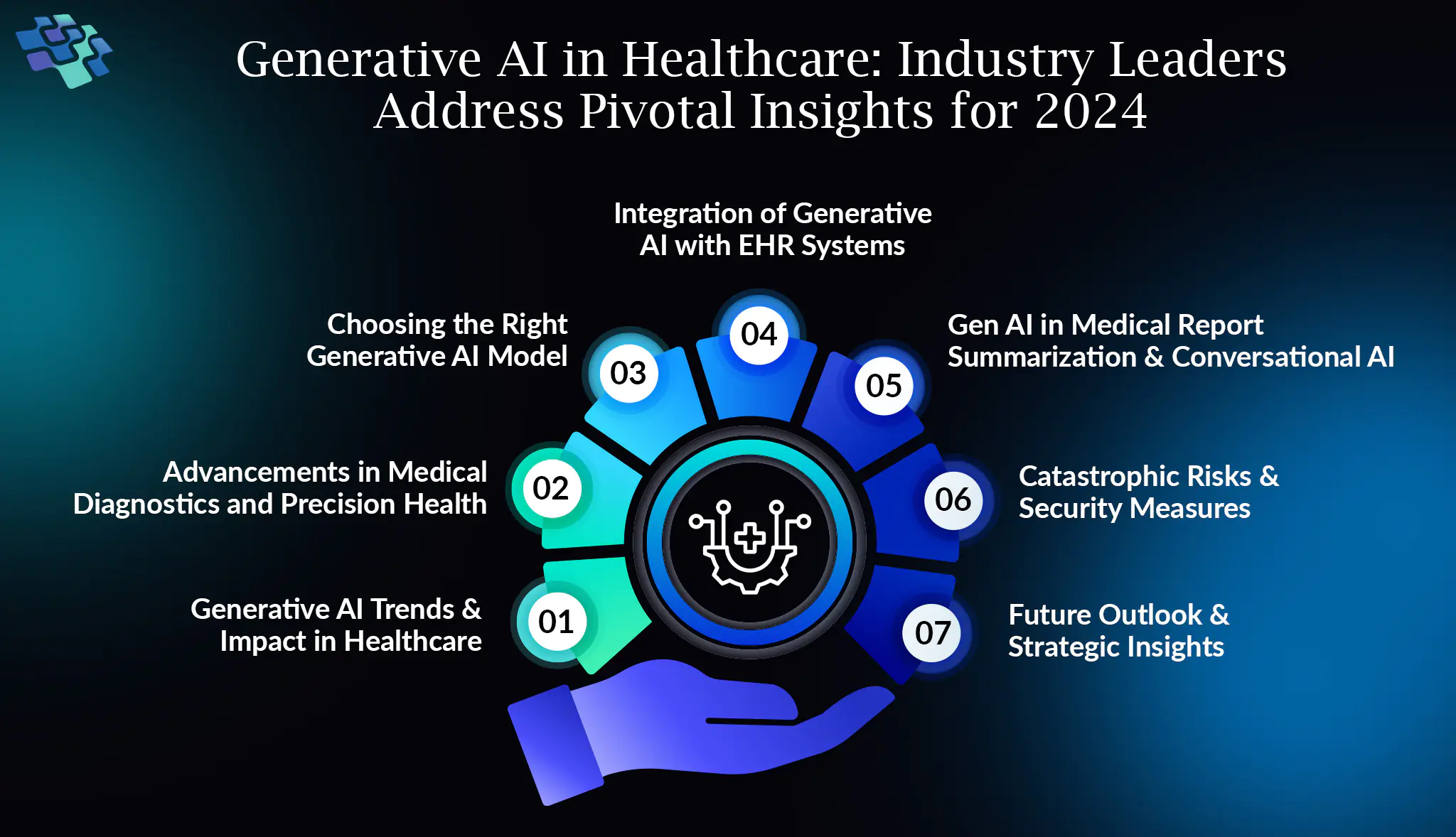
Generative AI in Healthcare: Reshaping Health Dynamics
Deepak Mittal, CEO and Founder of NextGen Invent, and Partha Anbil, Advisor at NextGen Invent, conducted an insightful interview on the transformative impact of Generative AI in healthcare for 2026.
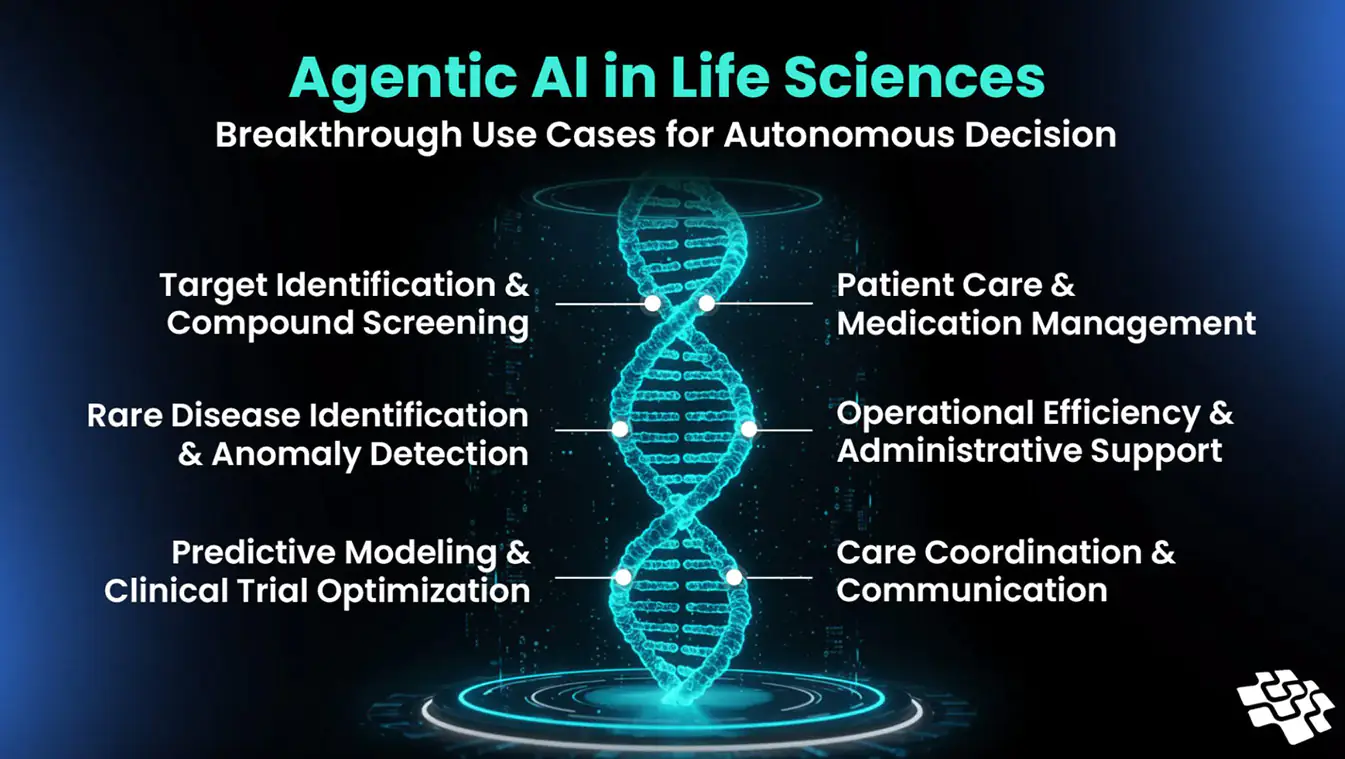
From Trial Delays to Smart Decisions: How Agentic AI In Life Sciences Is Redefining Innovation
Businesses in the life sciences are being compelled to adopt cutting-edge technologies like AI promptly due to mounting demands from R&D costs and increasingly complex regulations.
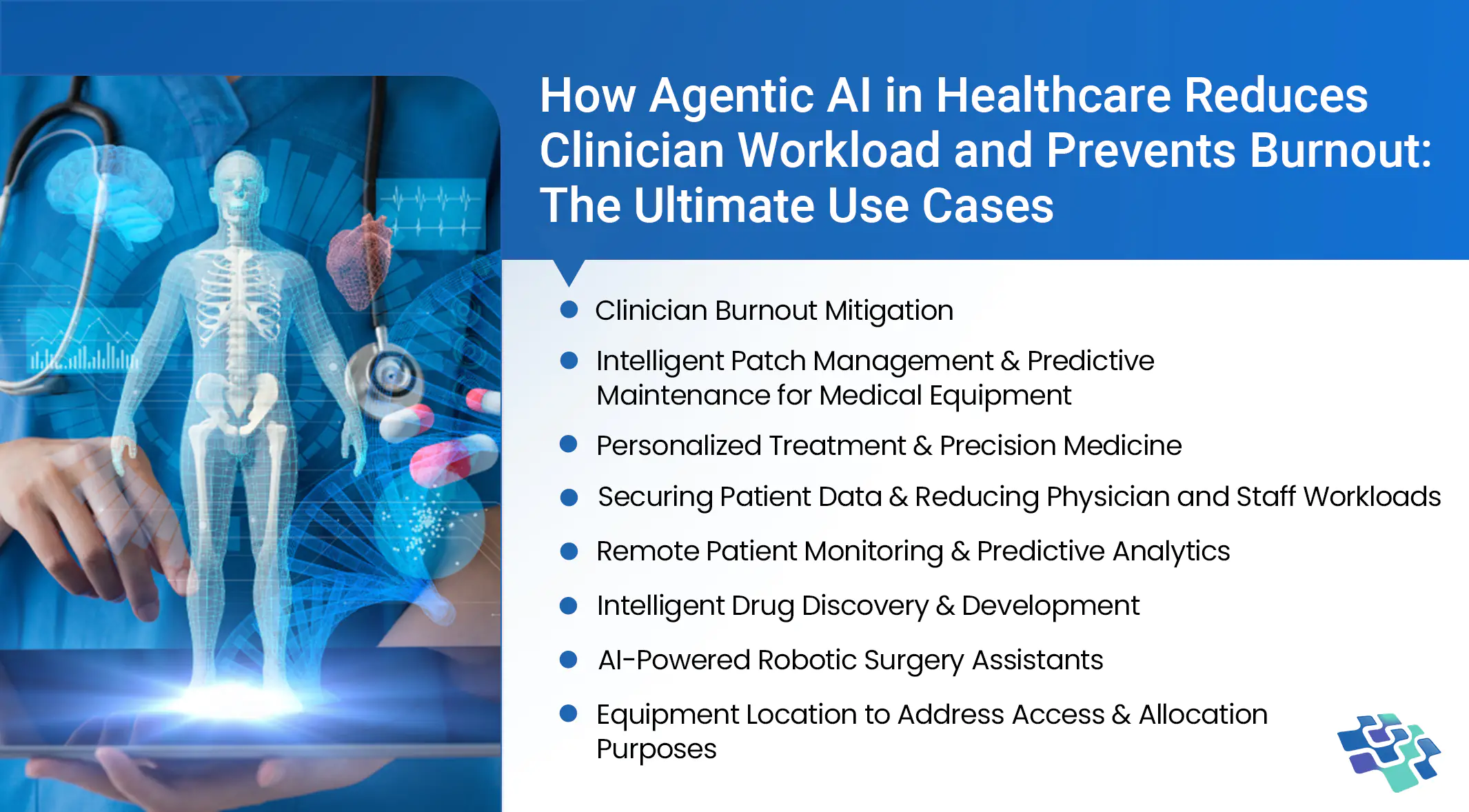
Agentic AI in Healthcare: Preventing Misdiagnosis and Reducing Diagnostic Delays
What if your healthcare system didn’t just respond to problems as they arose, but also foresaw them and took action before they even appeared?
Stay In the Know
Get Latest updates and industry insights every month.