
Latest Blog

AI in wearables

Why and How AI Wearables Are Transforming Industries Faster Than Expected

Ever wondered why your health issues, burnout, or performance drops are noticed only after they become problems? For end users, the real frustration isn’t a lack of data; it’s the lack of timely, actionable insight. That’s exactly how AI wearables are transforming industries today. They are shifting from passive tracking to proactive, real-time intelligence that anticipates issues before they disrupt lives or operations.


Read More >>

Multimodal AI Development

Multimodal AI Use Cases: How Multimodal Models Work and How Enterprises Are Scaling Generative AI

If your enterprise AI strategy still relies mainly on text-based models, you’re not preparing for the future; you’re optimizing a version of the past that’s already fading. The next wave of competitive advantage will not come from better prompts alone, but from multimodal AI use cases that combine text, images, audio, video, and structured data to mirror how the real-world works.


Read More >>

AI powered wearables

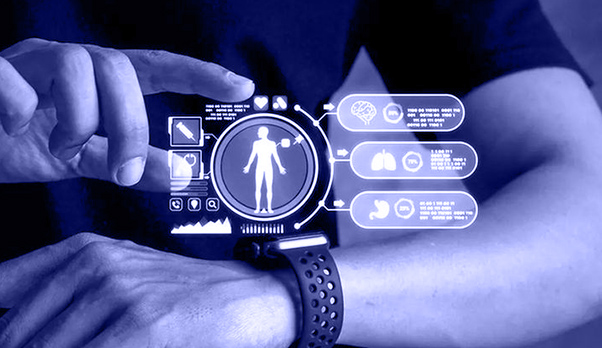
AI in Wearables: Helping You Manage Chronic Diseases in Real Time

The aging population and the rising incidence of chronic conditions like cancer, diabetes, and heart disease have raised the need for remote health monitoring systems. According to research, the coronavirus pandemic has pushed the deployment of AI in wearables, which is predicted to grow the AI healthcare industry from $10.4 billion in 2021 to $120.2 billion in 2028.


Read More >>

AI in population health management

AI for Population Health Management: Redefining Healthcare Outcomes Through Data-Driven Intelligence

As a healthcare executive, you have undoubtedly encountered a scenario in which you are attempting to pinpoint important patterns but are unable to do so because of a tedious manual reporting procedure and compartmentalized systems. AI for population health management can really help in this situation.


Read More >>

Physics artificial intelligence

Physical AI Use Cases: Real-World Applications, Examples, and Benefits Transforming Modern Industries

Powerful language models, like the ones that make chatbots work, are combined with robots or robotic exoskeletons. This lets machines understand what they are told, see what’s going on around them, and act on it. In this blog, we take an in-depth look at the most impactful Physical AI use cases, real world examples, along with its key benefits, and Physical AI trends 2026.


Read More >>

Agentic AI vs LLM

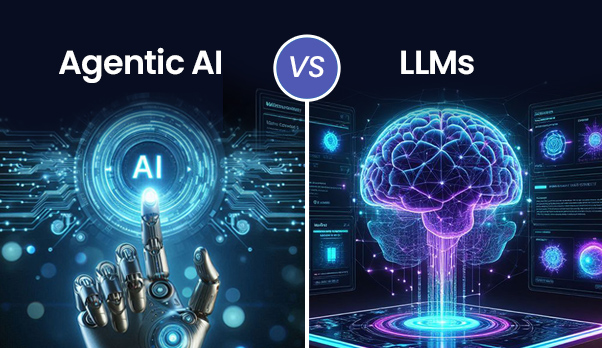
Agentic AI vs LLMs: What’s the Real Difference That Impacts Your Business?

Did you know that Agentic AI cuts task time by 86% and increases autonomous decision-making efficiency by 35%? By 2029, 80% of client issues will be resolved by Agentic AI, resulting in a 30% reduction in costs. Agentic AI vs LLMs collectively represent a breakthrough advancement in intelligent automation, radically changing the way robots understand, reason, make decisions, and operate autonomously.


Read More >>

AI on robotics

Artificial Intelligence on Robotics: Transforming Machines into Decision-Makers

Across industries, AI-driven robots are improving precision, efficiency, and operational safety while redefining productivity standards. Unlike conventional robots that rely on fixed programming, AI-powered systems can learn from data, adapt to dynamic environments, and make real-time decisions.


Read More >>

SLM vs LLMs

SLM vs LLM: A Practical Guide for Enterprises Adopting Generative AI

A fundamental element of this change is NLP, which drives AI-enabled technologies such as chatbots, virtual assistants, and automated content generation. As businesses incorporate AI into their operations, they must choose between SLM vs LLM. Each model type presents unique benefits and compromises regarding cost, computing efficiency, accuracy, and scalability.


Read More >>

Generative AI Due Diligence

Generative AI in Due Diligence: Why Traditional Processes Fail & How to Fix Them

Generative AI in due diligence is emerging as a direct response to this inefficiency. Too often, critical risks, such as hidden liability clauses, surface late in the process, forcing price revisions, extended renegotiations, and costly delays that erode deal value.


Read More >>

aws vs azure services

AWS vs Azure Comparison: Which Cloud Platform Is Better for Your Enterprise in 2026

What began as a basic infrastructure alternative has evolved into an advanced and flexible ecosystem, enabling individuals and enterprises to access computing resources on demand without the need to own or maintain physical infrastructure. As organizations evaluate leading cloud platforms, the AWS vs Azure comparison has become a critical consideration.


Read More >>

Benefits of Databricks

Databricks Benefits: Building the Foundation for Next-Gen Business Intelligence

As organizations generate and consume more data than ever before, the ability to use it effectively and responsibly has become a strategic imperative. Databricks benefits stand out through its Lakehouse architecture, which unifies the strengths of traditional data warehouses and modern data lakes to deliver a holistic, future-ready data platform.


Read More >>

Data Warehouse Microsoft Fabric

Data Warehouse in Microsoft Fabric: Powering the Next Generation of Unified Analytics

Microsoft Fabric addresses this need through a unified analytics platform that seamlessly integrates data engineering, data science, real-time analytics, data warehousing, and business intelligence into a single, cohesive experience. Designed specifically for SQL Server professionals, the Data Warehouse in Microsoft Fabric offers a familiar T-SQL–based development experience that closely resembles on-premises workflows.


Read More >>

AI in Drug Development

How AI Drug Development Enhances Product Improvement Across the Drug Lifecycle

Did you know that it costs more than $2 billion and takes an average of 10 to 15 years to bring a new drug to the market? This significant timescale and investment underscore the pharmaceutical industry’s shift towards AI drug development as an effective solution. It helps in the analysis of intricate information to forecast medication interactions and enhance clinical trials.


Read More >>

AI in biotechnology

AI in Biotech: Solving R&D Complexity, Data Silos, and Time-to-Market Pressures for Life Sciences Innovators

Despite decades of advancements in medical science, there are still many major health issues facing humanity. Diseases like Alzheimer’s, diabetes, and cancer are still unpredictable and challenging to treat. These disorders affect millions of individuals globally, frequently with few treatment options and unsatisfactory results. Despite some success, traditional medicine frequently fails to adequately address the complexities of these conditions. For example, there are currently no viable treatments for Alzheimer’s disease, which affect millions of people worldwide, to stop or reverse its course. AI in biotech is where it comes into play at this point.


Read More >>

AI agents ROI framework

The CEO Playbook: Transformative Agentic AI for Enterprise ROI Use Cases Driving Success

According to a recent McKinsey survey, 42% of businesses using AI report a decrease in operational expenditure. Even more compelling, 59% of those companies confirm measurable revenue growth. These impressive outcomes highlight why Agentic AI for enterprises ROI is becoming a central priority, and why organizations striving to stay competitive are rapidly embracing Agentic AI development.


Read More >>

finance data warehousing

How AI-Driven Data Warehousing in Finance Will Empower FinTech Businesses in 2026

Ever feel like financial data is everywhere, but nowhere can use it? That’s where data warehousing in finance comes in. It works like the central brain, pulling data together, keeping it accurate, and making it easy to use. With this strong base, finance leaders can move faster, serve customers better, and make smarter investment decisions.


Read More >>

Zero-Friction SDLC

Agentic AI in Action: An Executive View on Building a Zero-Friction SDLC

In an era where applications are no longer just built, but co-created with autonomous AI agents, software development is entering a transformative new phase. In this exclusive interview, Deepak Mittal, Founder & CEO of NextGen Invent, and Michael Kaminaka, Chief Growth Officer at NextGen Invent, unpack how Agentic AI is redefining how products are conceived, engineered, tested, deployed, and evolved, paving the way for a zero-friction SDLC.


Read More >>

healthcare reimbursement model

Healthcare Reimbursement Trends in 2026: How AI Is Transforming the Reimbursement Process

The medical ecosystem will depend on upcoming healthcare reimbursement trends, yet practitioners are increasingly confronted with patient collections and no-shows. Patients’ out-of-pocket expenses have significantly increased as the financial burden continues to shift in their direction.


Read More >>

AI manufacturing quotation

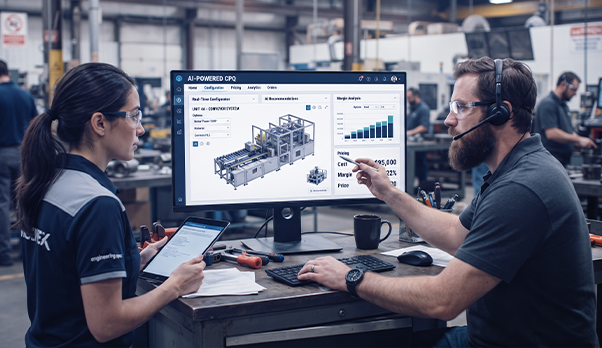
AI for Manufacturing Quotation: How Manufacturers Can Beat Quoting Delays & Costing Challenges

Have you ever lost a potential order simply because your quote took too long or wasn’t competitive enough? AI for manufacturing quotation simplifies the entire process by automating data extraction, optimizing pricing tactics, and ensuring consistency across sales channels.


Read More >>

AI in Healthcare Staffing

Agentic AI in Healthcare Staffing: From Buzzword to Breakthrough in Reducing Clinician Burnout

One of the most significant and growing issues facing the healthcare sector is staffing. The number of patients is growing daily, yet healthcare practitioners find it challenging to manage patients efficiently due to a lack of nurses, experts, and support personnel. Over 50% of US hospitals are looking into agentic AI to improve staff management, according to the American Hospital Association. Agentic AI in healthcare staffing facilitates demand forecasting, scheduling optimization, and personnel redeployment.


Read More >>

healthcare analytics software

The Role of Healthcare Analytics in Reducing Readmissions and Enhancing Value-Based Care

NextGen Invent offers Agentic AI enabled healthcare analytics software services to overcome challenges like fragmented data, high costs, and inefficiencies. This blog explores the necessity of adopting healthcare analytics, showcasing its benefits such as early diagnosis, faster drug discovery, smarter decisions, risk prevention, and improved patient outcomes.


Read More >>

agentic AI and healthcare

Agentic AI in Healthcare: Preventing Misdiagnosis and Reducing Diagnostic Delays

What if your healthcare system didn’t just respond to problems as they arose, but also foresaw them and took action before they even appeared? We’re headed in that direction with the introduction of agentic AI in healthcare. While traditional AI models such as machine learning, deep learning, natural language processing (NLP), and computer vision are being used in everything from virtual assistants to predictive diagnostics, they are mostly helpful for certain, predefined tasks in the healthcare sector.


Read More >>

Agentic AI manufacturing

Agentic AI in Manufacturing: How Smart Autonomy Reduces Downtime and Improves Workplace Safety

Currently, most manufacturers utilize AI on the manufacturing floor as a manual analyzer or order taker; however, agentic AI can be more. In an era where there is a shortage of human expertise to complete tasks, agentic AI in manufacturing can be the complete factory management solution of the future that businesses require.


Read More >>

agentic ai in the supply chain

How Agentic AI in Supply Chain Is Powering the Next Big Revolution—and Why It Should Matter to You

Instead of being direct beneficiaries, the non-technical users, procurement specialists, warehouse managers, and transportation coordinators have mostly stayed on the periphery, consuming insights. With agentic AI in supply chain management, this equation changes things dramatically.


Read More >>

Stay In the Know

Get Latest updates and industry insights every month.