Why and How AI Wearables Are Transforming Industries Faster Than Expected


Beyond mere step counting, modern AI-driven wearables incessantly assess biometrics, behavioral patterns, and ambient data to provide tailored insights at key moments. For digital transformation leaders, CTOs, and product managers, these devices are no longer consumer add‑ons; they are powerful enablers of predictive health, workforce safety, and performance optimization. From healthcare and manufacturing to transportation and defense, AI in wearables is redefining how humans and technology work together to solve real-world problems faster, safer, and smarter.

Let’s Evaluate Your Use Case and Engineer a Secure, High-Impact AI Wearable Platform
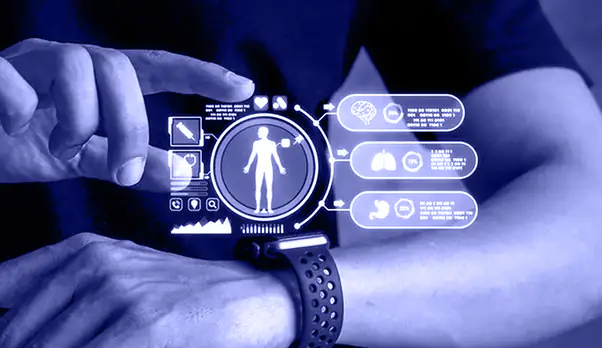
“One of the most transformative areas where the AI impact on the wearable technology market is evident in healthcare. AI-powered wearables have revolutionized how individuals monitor and manage their health, offering real-time insights once available only to medical professionals. AI-enabled wearables can detect early signs of health issues, such as irregular heart rhythms or abnormal glucose levels, enabling proactive intervention. This capability is particularly valuable for managing chronic conditions like diabetes or cardiovascular diseases.”– MarketsAndMarkets
How AI Wearables Are Driving Business and Operational Excellence
AI-powered wearables have far-reaching effects that go well beyond the health of specific users. It opens up new possibilities for productivity, safety, and efficiency for operations directors and company executives.
- For instance, staff members can wear smart vests or helmets with AI sensors in industrial situations. As an essential safety feature in high-risk settings, these devices can track an employee’s physiological status to identify early indicators of exhaustion or heat stress. Before an accident happens, the AI can send out an alarm suggesting a break.
Understanding the potential of wearable AI technology or how AI wearables are transforming industries is essential for future product development and market strategy for CTOs and product managers. The secret is to use the data gathered to develop new services and sources of revenue.
- A sports company might, for example, incorporate AI-powered insoles that assess an athlete’s running gait and suggest the ideal shoe style or training modification.
In addition to improving the product line, this offers priceless information for further product development. Instead of producing static products, these wearables’ capacity to provide real-time insights enables businesses to build dynamic, responsive ecosystems.
Emerging AI Wearable Industry Adoption Trends and Active Research Areas
The advancement of wearable AI technology persists through research initiatives that yield more advanced, adaptable, and autonomous wearable devices. This research illustrates how wearables can collaboratively learn via distributed training techniques that safeguard user privacy by circumventing direct data sharing.
- Biosensing technology, in conjunction with predictive modeling, allows physicians to continuously monitor patients to identify health issues early. Wearable biosensors and AI technologies are being used in healthcare settings for real-world patient care and medical monitoring.
- By analyzing behavioral patterns and physical signs, AI models can recognize mental health disorders such as stress, anxiety, and cognitive exhaustion, hence increasing the capacity for mental health assessment. These systems use AI to forecast health outcomes for more successful mental health interventions, enhance data accuracy, and understand complex biomedical data. Furthermore, wearable AI technology is being developed to track and evaluate the quality of sleep, offering comprehensive insights into sleep stages and disruptions to enable individualized healthcare and early detection of associated health problems.
AI‑Driven Benefits for Modern Wearable App Development
- AI in wearables devices can produce customized or personalized recommendations, forecast diseases, and provide insights based on unique user data because of artificial intelligence.
- Additionally, these devices deliver contextual, real‑time insights that connect external factors, such as temperature, weather conditions, and noise levels, with user behavior, recommending optimal workouts or issuing alerts against harmful environments, further demonstrating how AI wearables are transforming industries through adaptive, intelligence-driven experiences.
- By recognizing patterns in symptoms, spotting early indicators of disease, optimizing exercise regimens, facilitating remote consultations, removing the need for urgent testing, and enhancing the user’s general well-being, wearables with AI capabilities help to enhance health outcomes.
- AI makes fitness tracking, health monitoring, nutrition restrictions, and fall or other emergency detection easier with its real-time processing capabilities and quick feedback system.
The Role of AI in Modern Wearable Health Tech Devices
Artificial intelligence is revolutionizing the wearable health technology industry by leveraging data to deliver critical insights and personalized health recommendations through predictive analytics. Here are a few examples:
- Data Analysis: Wearable devices accumulate vast amounts of data daily. AI algorithms facilitate healthcare data analysis to identify trends and yield actionable insights. For instance, AI can identify arrhythmias from ECG data, warning people of potential cardiac problems before they escalate.
- Predictive Analytics: AI can forecast health concerns by analyzing past data. For example, based on a user’s activity patterns and physiological data, a wearable device can use machine learning models to estimate the likelihood that the user will develop conditions such as diabetes or hypertension.
- Customized Health Recommendations: AI enables wearable health technology to provide tailored health recommendations based on user preferences and behaviors. These devices can propose tailored exercise regimens or nutritional adjustments to assist users in achieving their health objectives by evaluating activity levels, dietary habits, and vital signs.
Key Challenges and Practical Solutions in AI‑Powered Wearables
Despite the rapid adoption of AI‑powered wearables, developers and businesses continue to grapple with critical challenges around device performance, data privacy, and sustained user engagement. As expectations rise, so does the complexity of delivering real‑time intelligence without compromising trust or usability. Understanding these challenges and the innovations addressing them offers valuable insight into how AI wearables are transforming industries, turning challenges into opportunities for more secure, efficient, and user-centric solutions.
1. Data Overload
Without actionable insights, consumers may become overwhelmed by wearable data such as steps, heart rate, and calories. The practical impact of the technology is limited because many users struggle to understand the significance of metrics or patterns.
Strategic Solution: Wearable technology can now convert raw data into easily understood insights through real-time data processing and context-aware AI algorithms. For example, incorporating temporal convolutional networks provides immediate feedback by enabling the identification of micro patterns over time.
2. Data Privacy & Security
Data privacy becomes a key issue as AI devices continuously gather sensitive personal data, such as heart rate variability, sleep patterns, and real-time location. This data is frequently processed by AI algorithms both on-device and in the cloud, raising the possibility of breaches.
Strategic Solution: To address this, developers employ on-device machine learning models, secure edge AI processing, and deploy end-to-end encryption. Methods such as differential privacy, federated learning, and compliance with GDPR/HIPAA regulations are essential for establishing trust and protecting personal health information.
3. Power Consumption
Executing deep learning models on compact, battery-operated devices strains power usage. Ongoing sensor monitoring, instantaneous analytics, and wireless communication can swiftly deplete wearable batteries.
Strategic Solution: Developers are increasingly utilizing tiny machine learning (TinyML) and low-power AI chipsets. These enhance on-device inference, enabling AI computations without recurrent cloud synchronization, conserving battery life while ensuring responsiveness.
Want To Reduce Safety Risks and Downtime? See How AI Wearables Optimize Performance and Operations
How AI Wearables Are Transforming Industries Through Real‑Time Intelligence
AI‑powered wearables generate value through on‑device inference, fusing IMU, PPG, and ECG signals with edge‑AI models to detect anomalies, predict fatigue, and optimize workflows in real time, demonstrating how AI wearables are transforming industries through low‑latency intelligence, reduced data transmission, and precision operational control.
 1. Healthcare: AI‑Driven Remote Patient Monitoring
 1. Healthcare: AI‑Driven Remote Patient Monitoring
One of the most impactful areas where AI in wearables makes a real difference is healthcare. These devices go far beyond basic health tracking by enabling continuous, remote monitoring of patients with chronic conditions such as diabetes, heart disease, and respiratory disorders.
- AI‑powered wearables also support personalized care by generating treatment and recovery plans tailored to individual health patterns.
- By collecting and analyzing biometric data like heart rate, activity levels, and oxygen saturation in real time, AI in wearables helps clinicians detect early signs of abnormalities, often before symptoms become severe.
- For elderly individuals, features such as fall detection and automated emergency alerts provide an added layer of safety and peace of mind.
- During rehabilitation, wearable-driven AI systems can dynamically adjust therapy exercises based on patient progress, ensuring faster and safer recovery.
Together, these capabilities are reshaping healthcare delivery by making it more proactive, precise, and accessible.
2. Manufacturing: AI‑Enabled Workforce Safety Optimization
AI‑driven wearables are increasingly reshaping industrial environments by improving workforce safety while also strengthening productivity standards. These devices continuously collect and interpret physiological and environmental data, allowing organizations to respond to risks before they escalate.
- AI wearables help identify when workers can be physically or mentally strained, enabling timely interventions that prevent burnout and errors.
- At the same time, sensors embedded in wearables analyze environmental conditions, such as excessive heat, toxic exposure, or unsafe movements, in real time, helping companies detect hazardous situations early and reduce the likelihood of serious accidents.
- In physically demanding roles, wearable exoskeletons enhanced with AI play a vital role. They assist workers in lifting and repetitive tasks by dynamically adjusting movement support, significantly reducing musculoskeletal strain and long‑term injuries.
- Additionally, AI‑powered augmented reality glasses are improving efficiency on assembly lines by providing hands‑free instructions, visual guidance, and error detection, allowing line operators to work faster and more accurately.
3. Supply Chain & Logistics: AI‑Augmented Operator Safety Intelligence
Through hands‑free communication and real‑time guidance, AI in wearables helps logistics workers navigate warehouses, distribution centers, and delivery routes with minimal distraction.
- It allows them to stay focused on their tasks while maintaining constant situational awareness, improving both speed and accuracy.
- In aviation, wearable AI technology is addressing growing safety concerns by closely monitoring pilot fatigue and alertness. By analyzing indicators such as eye movement, reaction time, and posture, these devices can detect early signs of drowsiness and issue timely alerts.
- Similar driver monitoring systems are used in road transportation, where eyelid tracking and posture sensors identify fatigue before it leads to accidents.
- In supply chain environments, these wearables support pick‑and‑pack operations by visually guiding workers to the next item, reducing search time while increasing picking speed and order accuracy.
4. Fitness: Edge‑AI Wearable Telemetry Optimization
Heart rate monitors and GPS trackers are examples of wearable AI devices that offer real-time performance insights.
- Professional soccer teams use AI tools to create individualized training plans for each player by integrating data from wearable trackers.
- Wearable sensors in American football track concussions by detecting the angular and linear head accelerations that occur during impact. By helping medical personnel make sound decisions regarding player safety, this real-time data can help avoid serious injuries.
- Heart rate monitors are used to track cardiovascular exercise in real time, so endurance athletes like bikers and marathon runners are not excluded. They can avoid overtraining, maintain ideal training intensities, and enhance overall performance using this knowledge.
These Edge AI-enabled devices provide instantaneous feedback, enabling athletes to modify strategies in the middle of a performance or improve their training plans for better results.
5. Defense & Security: AI‑Enabled Tactical Situational Awareness
Wearable sensors continuously track vital signs such as heart rate, body temperature, and fatigue levels, giving medics real‑time visibility into a soldier’s physical condition. This allows medical teams to quickly identify who needs urgent care, even in high-pressure combat or training environments where time and visibility are limited.
- AI‑enabled augmented reality helmets are improving situational awareness on the field. These helmets overlay critical information, such as navigation routes, threat locations, and team positions, directly into the soldier’s line of sight.
- By reducing the need to consult external devices, soldiers can make faster, more informed decisions while staying focused on their surroundings.
Check Our Case Study: POCUS AI to Enable Rapid Battlefield Injury Assessment & Life-Saving Decisions of Soldiers
Too Much Data, Too Little Action? Turn Wearable Signals into Real Business Impact With AI
Advancing Human Mobility: AI‑Powered Exoskeletons in Healthcare and Industry
One of the most innovative applications of wearable AI technology is exoskeletons. The incorporation of artificial intelligence, which enables the exoskeleton to react intelligently to the wearer’s actions and requirements, is what makes them truly revolutionary.
Exoskeletons, which combine robotics with AI wearable technology, can be used for several tasks, including assisting industrial workers in safely moving heavy objects or giving paralyzed people their mobility back. They are also becoming more well-known in the defense sector, where they can help soldiers in challenging circumstances.
Where AI‑Powered Exoskeletons Deliver the Most Impact
- Industrial Productivity: In warehouses, factories, and construction sites, substantial lifting frequently leads to injuries and physical stress. AI-driven exoskeletons mitigate this risk by equally distributing weight and augmenting the wearer’s inherent strength. For example, an employee can transport burdens that often induce weariness; nevertheless, with the assistance of wearable AI technology, they can execute jobs more safely and efficiently.
- Military and Defense Uses: Soldiers utilizing AI wearables can carry heavier gear, traverse difficult terrain more swiftly, and mitigate tiredness during extended missions. The inclusion of AI enables the exoskeleton to react dynamically to its surroundings, hence ensuring safety and performance. This technology enhances personal capabilities and improves mission success rates in challenging environments.
- Healthcare Applications: AI systems evaluate inputs from the patient’s muscles or cerebral activity, forecasting anticipated actions, and providing assistance accordingly. This adaptive support not only expedites rehabilitation but also enhances patient confidence by enabling patients to gradually regain independence.
Future of AI Wearable Implementation in Business: Integrating Intelligence, Ethically
The way AI hardware is going points to a future where intelligence is more widely and personally present in our lives. With healthcare, this means:
- AI Wearable Ecosystem Development: More integration between AI wearables that work well together, making ecosystems of devices that work together instead of independent products.
- Specialized AI Agents: In comparison to general-purpose assistants, future devices will have more specialized AI agents for health fields.
- Increased Healthcare Provider Adoption: Formal adoption by healthcare providers, including prescriptions or reimbursement models, is expected to rise as clinical validation improves and regulatory processes become more transparent.
Clinicians’ and patients’ needs are directly met by the growing AI hardware industry’s focus on productivity and healthcare. The advances promise to improve efficiency, promote higher well-being, and expand human capacities.
How to Implement AI Wearables in the Workplace
Wearable AI’s successful integration into the workplace necessitates a strategic approach that considers both technological and human factors.
- A comprehensive requirements assessment is the initial step that organizations must take to identify the specific areas in which wearable technology can add value. This necessitates an interaction with employees to ascertain their concerns and to solicit feedback on potential solutions.
- By fostering a sense of ownership and increasing the acceptability of new technologies, companies can involve their staff in the decision-making process.
- Organizations should allocate resources to pilot programs that evaluate the efficacy of wearable devices in practical applications after identifying their requirements.
- Businesses can assess the effects of wearables on employee satisfaction and productivity through these pilot programs prior to implementing a full-scale implementation.
- It is imperative to offer employees exhaustive training during this phase to ensure that they can effectively operate the devices and comprehend the data they produce.
End-to-end Wearable App Development with NextGen Invent
Wearable AI apps are redefining productivity, driving innovation, and enhancing digital experiences across industries. By leveraging artificial intelligence, these applications deliver personalized insights, predictive analytics, and seamless integration with wearable devices, clearly demonstrating how AI wearables are transforming industries by enabling smarter, data-driven interactions.
AI‑powered wearables are opening new avenues for digital transformation, helping organizations optimize operations, enhance decision-making, and support healthier, more connected lifestyles. From healthcare and fitness to manufacturing and enterprise environments, industries worldwide are rapidly embracing AI‑led innovation to stay competitive.
Partnering with a trusted artificial intelligence software development services provider allows businesses to fully capitalize on this momentum. At NextGen Invent, our experienced AI developers build customized wearable applications aligned with specific business goals, including advanced digital health software development services. We help organizations adopt cutting-edge wearable technologies, streamline workflows, and gain a measurable competitive edge.
If you have a strong idea, now is the time to bring it to life. Partner with NextGen Invent to estimate costs, navigate development with confidence, and launch a scalable wearable AI solution built for the future.
Frequently Asked Questions About How AI Wearables Are Transforming Industries

“AI wearables represent a strategic inflection point: shifting enterprises from reactive monitoring to anticipatory intelligence. Leaders who operationalize real‑time insights, governed by trust and scale, will unlock durable productivity gains, safer ecosystems, and sustained competitive advantage across industries worldwide today.”
Ruchi Garg

Chief Digital Officer
Related Blogs

AI in Wearables: Helping You Manage Chronic Diseases in Real Time
According to research, the coronavirus pandemic has pushed the deployment of AI in wearables, which is predicted to grow the AI healthcare industry from $10.4 billion in 2021 to $120.2 billion in 2028.
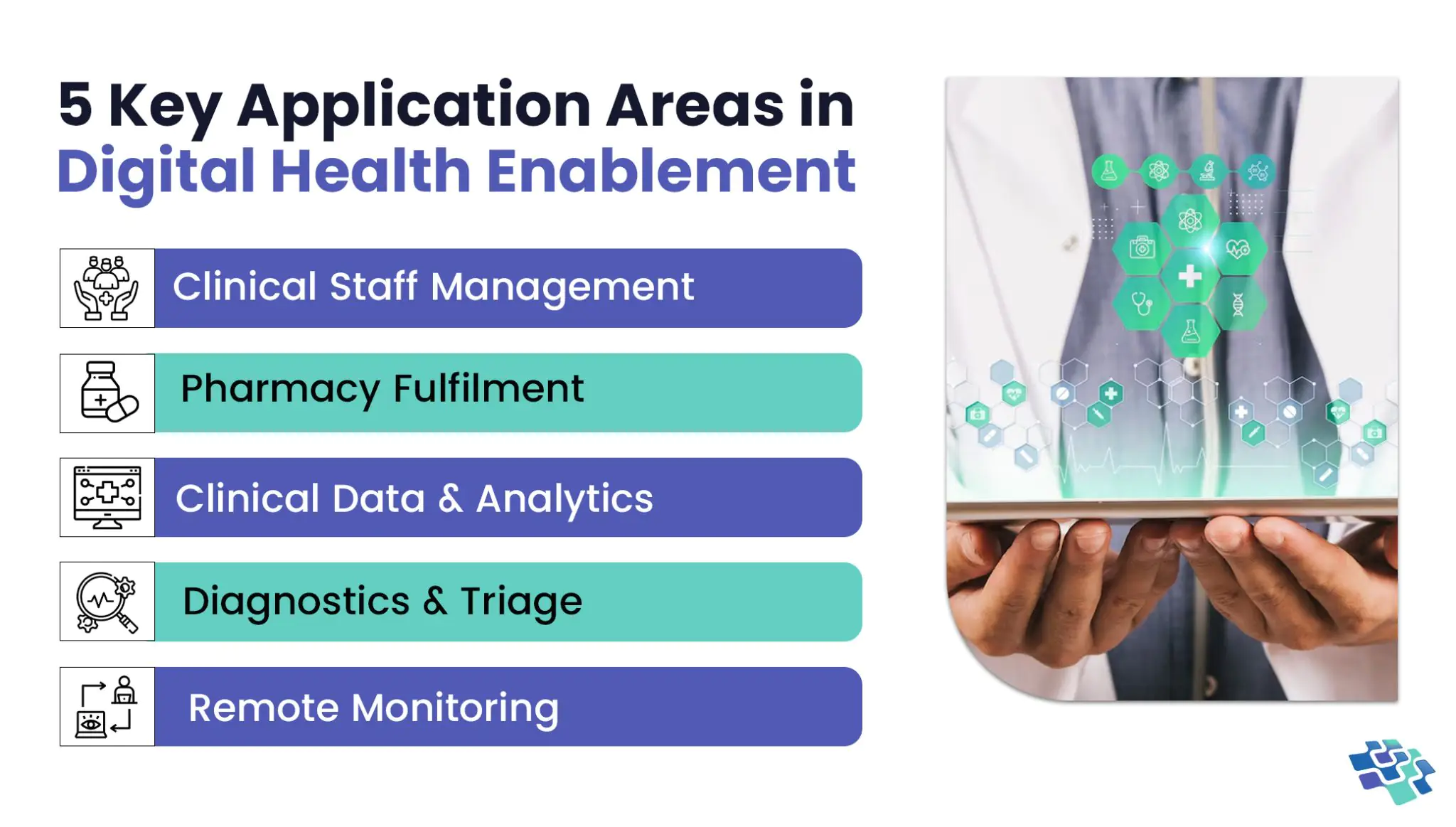
Unlocking Healthcare Innovation through Digital Health Enablement
What defines an effective digital health enablement system? Having quick and easy access to the data you need is undoubtedly important.
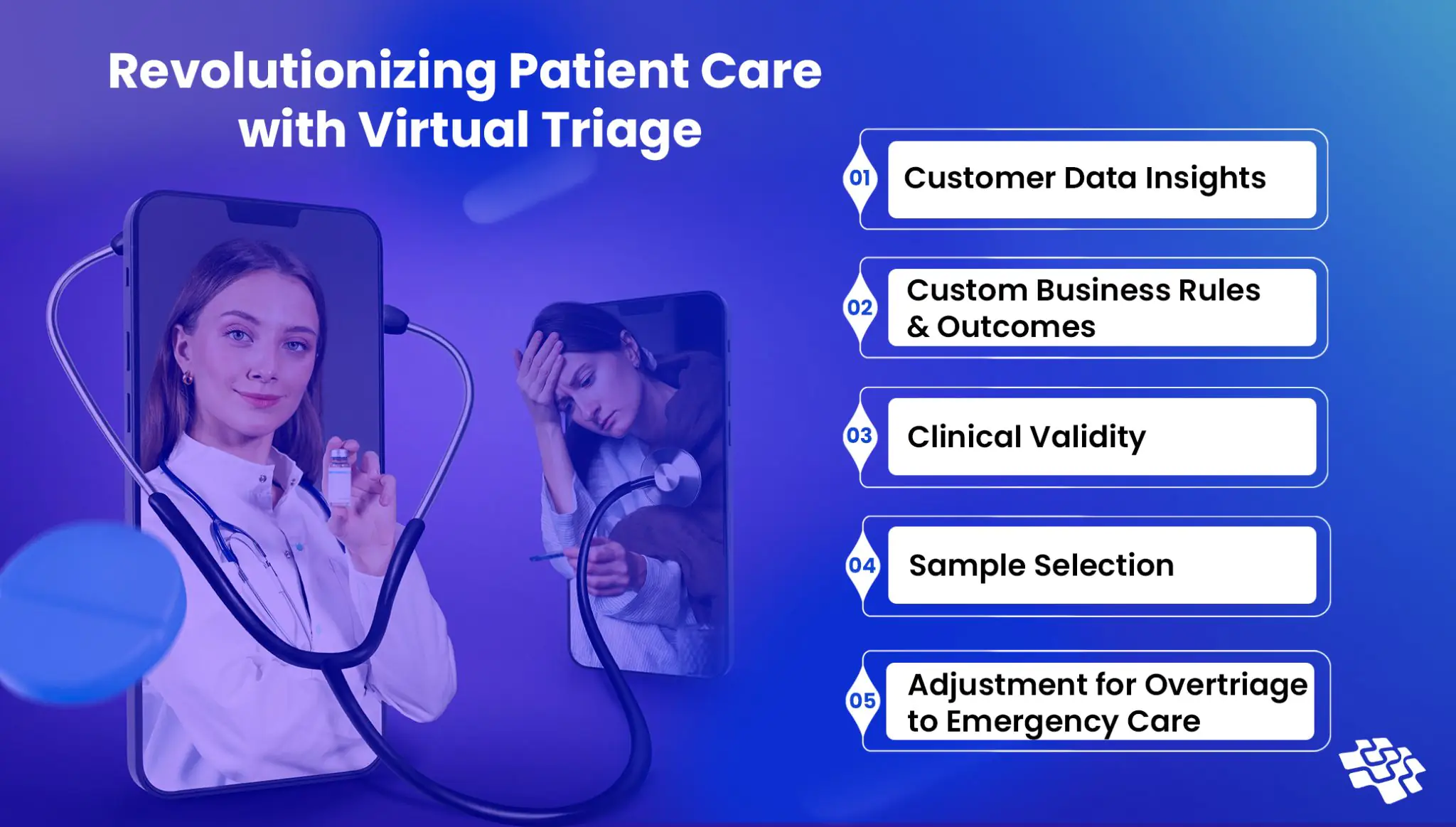
How Virtual Triage Transforms Patient Care Seeking Behavior?
Patients can interact with a triage specialist or have a digital AI chat experience in a virtual exam room that is accessible from their homes because of virtual triage in custom AI mHealth app development.
Stay In the Know
Get Latest updates and industry insights every month.