The Power of Data: Manufacturing Organizations turning into Smart Factories

[clear by=”60px” id=”” class=””][text]

smart factories, decision-making, data analytics, data-driven, intelligent automation

[/text][custom_heading id=”” class=”” style=””]

The Power of Data: Manufacturing Organizations turning into Smart Factories

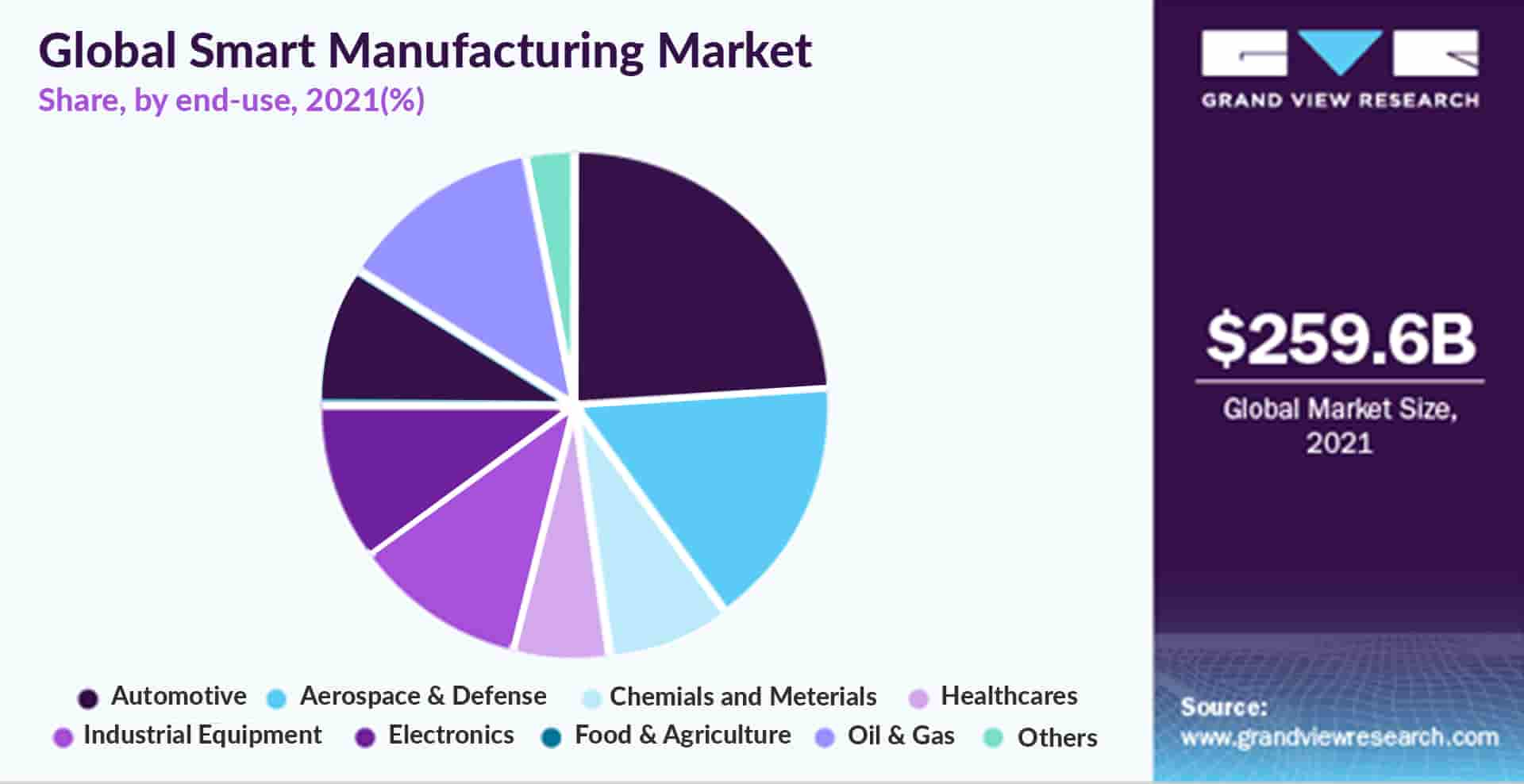
[/custom_heading][share facebook=”true” twitter=”true” linkedin=”true” email=”true” size=”small” id=”” class=”” style=”margin-top: 10px;”][clear by=”15px” id=”” class=””][text]“The global smart manufacturing market is expected to grow from USD 277.81 billion in 2022 to USD 658.41 billion in 2029 at a CAGR of 13.1% during the 2022-2029 period.”

– Fortune business Insight

[/text]
[image lightbox=”” width=”” is_gallert_item=”” src=”17238″ alt=”” href=”” title=”” popup_content=”” id=”” class=”” style=””]

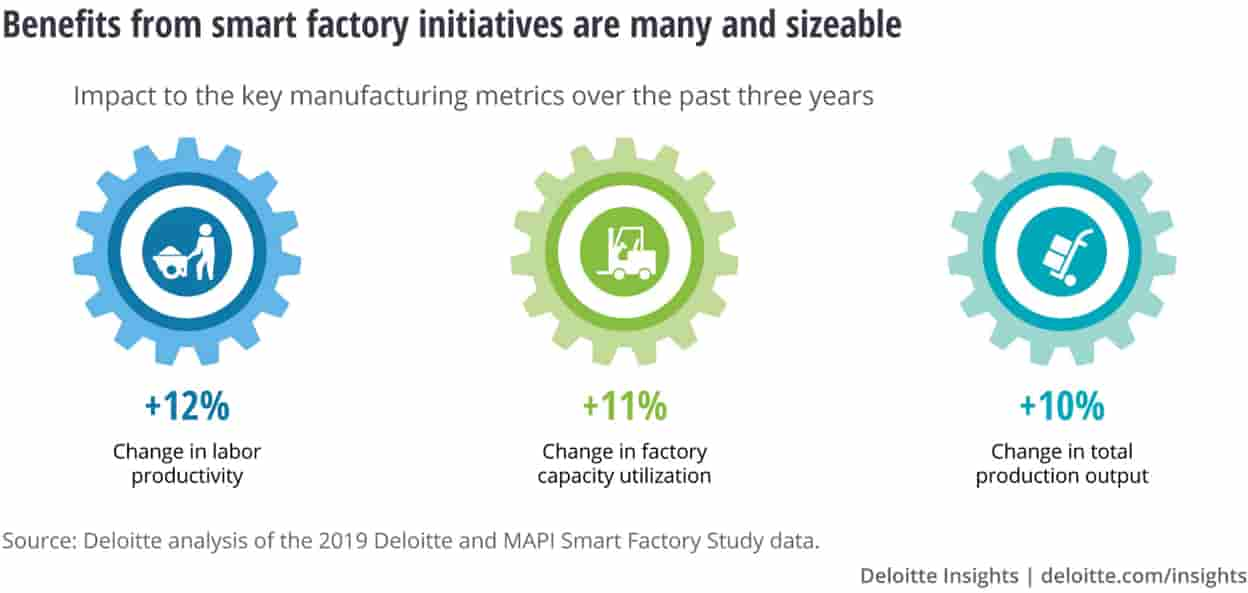
The power of Data, AI, automation and Analytics can enable manufacturers to increase productivity of their business by providing insightful predictions for better decision making and enabling intelligent automation.

Smart factories can monitor an entire organizations processes, from sales and product design down to the individual operators on the floor and support. Smart factories are powered to get a comprehensive view of all processes, which leads to faster response times, stronger decision-making capabilities, and fewer delays.

[custom_heading id=”” class=”” style=””]

Data is the key to ‘Smart Factories’

[/custom_heading][text]

When data is entered and managed manually, it is inconsistent and has missing value to support improvements in the manufacturing processes.

Sensor Data Gathering: Digital sensors installed on sensor-rich machines have enabled faster real-time data availability from factory floors. The availability of high-quality, high-value data enables the vision for “Smart factories of the future”, characterized by timely scheduling of tasks and pro-active actions. Process insights from manufacturing plant floors for all operations have opened doors for real-time surveillance, operational optimization, and adaptive controls.[/text]
Cloud Enablement for Data Storage and Computing: Advancements in computational infrastructure, represented by cloud and edge computing, have made it feasible to manage big data. This supports tasks of different temporal requirements, from process control to production schedules. The emergence of distributed production has transformed the traditionally centralized factories into a more service-oriented, individualized manufacturing resource.

McKinsey has predicted that data will play a central role in intelligent manufacturing, with key technologies including

  • Automated in-plant logistics
  • Data collection across supply chain
  • Data-driven predictive maintenance
  • Automation and human-machine collaboration
  • Digitalized quality system and process control,
  • Digital performance management
  • Smart planning and agile operations.
[clear by=”20px” id=”” class=””][custom_heading id=”” class=”” style=””]

Data to enable better Decision Making

[/custom_heading][text]

By digitally integrating an organizations’ current systems and harnessing data, companies are in a position to develop and refine areas like lean manufacturing and workforce management. It allows organizations to explore new ways of optimizing operations, driving higher productivity, and harnessing talent.

Understanding Managerial Decisions Amidst Uncertainty – Data analytics allows leaders to reinforce decisions through a process of iterative, evidence-based decisions. Educating executives can help reduce the knowledge gap by marrying traditional data analytics with management thinking and decision-making.

Once a data mindset is adopted, the next step is putting that insight into action and building the infrastructure in the organization to make good use of the available data. At its core, being exposed to data analytics, new analytics tools, and new ways to think about data can change how we approach problems and solutions.[/text]

[clear by=”20px” id=”” class=””][custom_heading id=”” class=”” style=””]

Data to Understand Customer Needs and Product Quality

[/custom_heading]

[clear by=”20px” id=”” class=””][text]

The success of IR 4.0 and IoT technologies for the manufacturing industry depends on digitalization, Data + AI + Analytics technologies. It can enable decisions on logistics, risk estimation, cost structures, growth strategies, quality control and improvements, built-to-order and other sales models, and post-sales services.

Manufacturers use data analytics to forecast customers’ needs for products. User data collected includes demographics, purchase patterns, user preferences, search history, browsing history, and more.

While this is a relatively new method of analyzing information, big data can now be used to understand consumer behaviour, which in turn can help improve customer satisfaction. Consumer behaviour knowledge leads to better promotions and target products, increasing sales, improving, and optimizing customer experience.

[/text]

[image lightbox=”” width=”” is_gallert_item=”” src=”17242″ alt=”” href=”” title=”” popup_content=”” id=”” class=”” style=””][clear by=”15px” id=”” class=””]
[clear by=”20px” id=”” class=””][text]Focus on Product Quality

Data-driven quality control techniques make a stronger platform to manage quality efficiently. With sensors, RFIDs, and machine-based applications at their disposal, manufacturers can now collect product quality data, such as various parameters, including location, machining, tolerance, and geometrics.

Computer vision can perform all-round quality monitoring, detect defects early, and provide a quick diagnosis. The data gathered can also be used to identify the root cause of product production failures. Using the latest technology, defects can be detected, diagnosed, and addressed before shipment reducing returns/refunds. Using data mining and data integration issues with equipment and inefficient procedures can also be detected.

[/text]

[clear by=”20px” id=”” class=””][custom_heading id=”” class=”” style=””]

Data to Increase Overall Equipment Efficiency (OEE)

[/custom_heading][text]

OEE, or Overall Equipment Efficiency, a measure of performance, can be broken into three parts: Quality, Productivity, and Availability. As the single most important measure of production measuring KPI: what proportion of the operational time a facility has been productive.

A smart factory uses cloud-based data analytics, AI/ML models, and Automation capabilities to speed up efficiency programs. With technologies such as, IoT, ML, and analytics, companies can build a hyper-connected production ecosystem powered by data to identify, predict, and avoid unplanned downtimes, from equipment malfunctions to quality issues.[/text]

[clear by=”20px” id=”” class=””][custom_heading id=”” class=”” style=””]

Data to Enable Intelligent Automation

[/custom_heading][text]Predictions made by Gartner indicate, “By 2025, more than 90% of enterprises will have an automation architect, up from less than 20% today.”

According to McKinsey, “At its core, Intelligent Process Automation (IPA) is an emerging set of new technologies that combines fundamental process redesign with robotic process automation and machine learning. It is a suite of business-process improvements and next-generation tools that assists the knowledge worker by removing repetitive, replicable, and routine tasks. And it can radically improve customer journeys by simplifying interactions and speeding up processes.”

Manufacturing industries are facing myriad challenges — from reducing downtime and having to meet ever-increasing regulations, to supply chain complexities, and growing skills gaps. Staying ahead of evolving demands in manufacturing is a tall order.

All these challenges have presented an excellent opportunity for manufacturing companies that adopt AI and automation technologies to speed up their journey to digital transformation. AI, Automation, and advanced analytics is helping to present a realistic view of operational efficiencies, workforce costs, and allow better decision-making, thereby transforming the landscape of manufacturing unit.

With digital robots, manufacturers are processing massive amounts of data to optimize order fulfilment, sourcing, scheduling appointments, and alerting. With predictive analytics solutions, maintenance engineers can predict errors and be able to fix them before the equipment is significantly affected. This technology allows for deep inspections of quality, which are far more detailed and robust than those done by humans.[/text]

[clear by=”20px” id=”” class=””][custom_heading id=”” class=”” style=””]

Conclusion:

[/custom_heading][text]

The move towards automated software, connected equipment, and data analytics are being mirrored by manufacturing companies looking to optimize their factory floors through recent technological advances. People + Process + Technology with data when brought together in the right mix can transform a manufacturing unit into a digital enterprise, making them a basis for robust smart factories. As manufacturing companies continue to embrace smart factory technologies, they will enjoy the benefits of maintaining predictive maintenance in their machines, better data stream management, and cost savings across a range of areas.

[/text]

[clear by=”20px” id=”” class=””][text]

Stay In the know

Get latest updates and industry insights every month.

[/text][clear by=”15px” id=”” class=””]

    5 Secrets of Successful Data Led Organizations

    [clear by=”60px” id=”” class=””][text]

    data-driven organization, data-driven, data-driven culture, data analysis, insight driven

    [/text][custom_heading id=”” class=”” style=””]

    5 Secrets of Successful Data Led Organizations

    [/custom_heading][share facebook=”true” twitter=”true” linkedin=”true” email=”true” size=”small” id=”” class=”” style=”margin-top: 10px;”][clear by=”15px” id=”” class=””][text]

    “The benefits of a data-driven culture is to examine and organize the data with the goal of better serving one organization’s customers and consumers,” says Alan Duncan, Vice President Analyst, Gartner. “It also bolsters and speeds up business decision-making processes.”

    Data-driven organizations are known to consistently outperform those that do not, making informed, efficient decisions that increase profitability and reduce costs.

    [/text]

    [image lightbox=”” width=”” is_gallert_item=”” src=”17128″ alt=”” href=”” title=”” popup_content=”” id=”” class=”” style=””]

    Effective data analysis can provide companies with an enormous competitive advantage, as corporate managers are able to get fresh insights about trends and customer behaviors that may otherwise be impossible. Using business-critical, real-time insights to identify key business challenges that impact an organization, which must be addressed, becomes a lot easier when data is on hand.

    Gartner predicts – “By 2023, data literacy will become an explicit and necessary driver of business value, demonstrated by its formal inclusion in over 80% of data and analytics strategies and change management programs.”

    Here are some characteristics that today’s successful data-driven companies have adopted:

    [custom_heading id=”” class=”” style=””]

    Creating a Data Driven Culture

    [/custom_heading][text]

    Every organization has different levels of expertise and people from widely different backgrounds but ultimately all should be united by the same goal. Even though there may be people who will not understand what the others are doing but they should know they are the same team, and that’s where the culture comes in.

    Focus on strategy while building a data driven culture is the need of today’s time. We need to establish a set of practices that brings together data, talent and tools in such a way that data becomes a default backbone of company operations.

    Many times, CEOs tackle data solely from the perspective of a business strategy, but implementing a successful strategy is not possible unless a company’s culture has already bought into the idea of being data-driven.

    To help foster this culture, data needs to stay available, and employees need to feel encouraged to incorporate facts and statistics into their reports, status and information provided at all times.

    [/text]

    [clear by=”20px” id=”” class=””][custom_heading id=”” class=”” style=””]

    Data Accessibility to Everyone

    [/custom_heading][text]

    Next, is making data relevant and available for everyone. Sometimes even the best data-driven companies still reside in silos making the data hard to access.

    Organizations cannot ignore the importance of data-driven culture in today’s accelerating and fast-paced world.

    [/text]

    [clear by=”20px” id=”” class=””][custom_heading id=”” class=”” style=””]

    Leaders Leading by Example

    [/custom_heading]

    [clear by=”20px” id=”” class=””][text]

    Organizations that are data-driven have at the helm strong leadership. It is a leadership that inspires and promotes a data-driven culture. Such leaders make it their priority to provide data, tools, and training to their employees so that they can be data-driven. Leaders of data-driven organizations ensure to garner support from rest of the organization, and the senior management team to deliver results.

    It is one thing to require that your people work with data, but it is quite another to show that you have the ability to drive decision-making and critical thinking using it. When CEOs and other corporate leaders set an example, they are also more likely to make the technology and human capital investments needed to power a data-driven organization.

    Successful business leaders have quickly jumped on the bandwagon and have invested in training and showcasing how data is driving important business decisions.

    [/text]

    [image lightbox=”” width=”” is_gallert_item=”” src=”17130″ alt=”” href=”” title=”” popup_content=”” id=”” class=”” style=””][clear by=”15px” id=”” class=””]
    [clear by=”20px” id=”” class=””][custom_heading id=”” class=”” style=””]

    Creating a Strategy

    [/custom_heading][text]

    A thoughtful strategy is, of course, crucial for the success of almost every enterprise effort, and data initiatives and analytics are no different. However, there are still a number of companies that are yet to achieve their data and analytics goals, and an increasing proportion admits that a lack of a strategy in these areas is a major barrier to success.

    To drive revenue in an organization it is imperative to be data driven as well as insight driven. Implementing a data-driven plan can help businesses make more informed decisions and turn customer insights into profits.

    Businesses that are successfully driving data have identified creating a strategy as the most critical element to meeting their company’s objectives.

    [/text]

    [clear by=”20px” id=”” class=””][custom_heading id=”” class=”” style=””]

    Treating Data as asset that provides ROI

    [/custom_heading][text]

    Business leaders must see data as a raw material to power analytics and decisions. Data should be treated as an important company product that needs to be packaged and distributed among groups throughout the enterprise.

    A product manager’s responsibility to consumers is to build a variety of revenue streams through channels, segments, and markets. In the same way, the owners of each data domain act as product managers for data, and their effectiveness is tied to revenues, satisfaction, quality, and other such measures.

    [/text]

    [clear by=”20px” id=”” class=””][custom_heading id=”” class=”” style=””]

    Conclusion:

    [/custom_heading][text]

    To be data-driven, organizations must rethink their approaches to using data in ways that go beyond technology. Becoming a data-driven organization also requires changes to the culture of the organization, the operating model, and the realization of real business value via use cases. Becoming a data-driven business requires having a coherent, holistic data strategy applied throughout an organization.

    [/text]

    [clear by=”20px” id=”” class=””][text]

    Stay In the know

    Get latest updates and industry insights every month.

    [/text][clear by=”15px” id=”” class=””]

      How can Organizations transform to be Data-Led and Insight driven

      [clear by=”60px” id=”” class=””][text]

      Digital Transformation, Data Led, Insight driven

      [/text][custom_heading id=”” class=”” style=””]

      How can Organizations transform to be Data-Led and Insight driven?

      [/custom_heading][share facebook=”true” twitter=”true” linkedin=”true” email=”true” size=”small” id=”” class=”” style=”margin-top: 10px;”][clear by=”15px” id=”” class=””][text]

      Business leaders of data-driven organizations realize the benefits of leaning from data and insights to make smart business moves. Data-driven organizations derive value from data analytics and the process of analyzing data to gain business insights. An insights-driven organization puts data and analytics front and center in its business strategy and across all levels, with each decision informed by insights gained from data and models.

      [/text]

      [image lightbox=”” width=”” is_gallert_item=”” src=”16233″ alt=”” href=”” title=”” popup_content=”” id=”” class=”” style=””]
      [custom_heading id=”” class=”” style=””]

      Why data, AI, and analytics matter?

      [/custom_heading][text]

      Over the past many years, business strategists have been obsessed with a data-driven mindset. But why does data matter so much? Well, the answer is straightforward: Businesses want to make decisions objectively, remove biases and identify inefficiencies. Data can reveal our habits and what our next action might be. It opens the door of opportunity and brings to the front and center, what’s possible. This idea of leading brings the culture to collect and analyze data for decision-making.

      According to McKinsey, 70% of digital transformation projects fail to meet the stated goals. It means most projects revolving around data are not getting the results they are looking for. More importantly, companies are flooded with mountains of data, with no growth in using this information to inform insights and strategies. There are organizations, though, getting it right.

      Here are a few core principles data-driven organizations are following. These principles are traits and behaviors thriving organizations are following.

      [/text]

      [clear by=”20px” id=”” class=””][custom_heading id=”” class=”” style=””]

      Decide and Plan what to achieve

      [/custom_heading][text]

      Often organizations are anxious to start using all the data they collect. They have gone through the process of ensuring the data is captured, so the next logical step is utilizing it. Companies are measuring everything, and since data is abundant, businesses end up with hundreds of analytics projects designed to measure or describe each facet of an organization.

      If a business challenge (problem) is decided based on business value it can unlock, then it is easy to come up with the questions to which you need to get an answer. The knowledge of datasets can make it easier to choose what data can help in getting an answer to the question.

      [/text]

      [clear by=”20px” id=”” class=””][custom_heading id=”” class=”” style=””]

      Understanding the gaps and issues

      [/custom_heading]

      [clear by=”20px” id=”” class=””][text]

      Along the way, organizations will run into data gaps and quality issues. What is meant by data gaps and data quality deficiencies? This might occur when you have multiple manual processes for a task, or maybe you want to measure something less obvious.

      When gaps and quality issues are revealed, data-driven organizations use this as an opportunity to streamline processes. This can include going back to the source systems and forcing more stringent requirements on the inputs of the data. It could mean building new systems to capture data or defining more explicitly the transformational and rationalizing steps needed before the data becomes useful.

      [/text]

      [image lightbox=”” width=”” is_gallert_item=”” src=”16235″ alt=”” href=”” title=”” popup_content=”” id=”” class=”” style=””][clear by=”15px” id=”” class=””]
      [clear by=”20px” id=”” class=””][custom_heading id=”” class=”” style=””]

      Data Governance

      [/custom_heading][text]

      Once the components for understanding have been put in place, data-driven organizations take the time to determine roles and assign ownership or simply put, establish the Who. A lack of roles and ownership leads to scenarios in which no one knows where the truth lies.

      Data-driven organizations identify the different roles and most importantly, assign each one ownership.

      [/text]

      [clear by=”20px” id=”” class=””][custom_heading id=”” class=”” style=””]

      Best Practices

      [/custom_heading][text]

      Data-driven organizations see every new project as an opportunity to establish best practices, and to use it as a model for how the next project should be approached. Starting with best practices can accelerate future initiatives.

      Having the right data element is critical in making sure the data collected has insight for decision-making. Here are a few best practices:

      • Set clearly defined goals.
      • Enforce data collection from all sources identified.
      • Ensure data is a central point for the organization not just to be used by one department.
      • Inform and educate everyone on how to utilize data assets for decision-making.
      • Collaboration among all departments and groups is essential.

      [/text]

      [clear by=”20px” id=”” class=””][custom_heading id=”” class=”” style=””]

      Measuring utilization and adoption

      [/custom_heading][text]

      As much as companies believe in measuring factors that affect businesses, the importance of measuring analytics usage and adoption also must be considered. Measurement is the key to understanding user behavior, everything from consumption to creation.

      There are plenty of ways these aspects are measured, but these are the three main areas that need to be focused on.

      User Engagement: The goal here is to figure out how well analytics are adopted and how much engagement is happening with users.

      Utilization: The focus is on the insights rather than the platform itself. Here, the focus is on digging deeper to see what things people are looking at and what they are interested in learning and analyzing.

      Performance: It is the balancing act of making sure end users have the experiences they want, getting what they need when they need it. Of course, uptime comes into play here, making sure there is an uninterruptible service, making sure when data is required to make decisions, that data is there. And finally, using normal monitoring techniques for reviewing logs, parsing out alerts from systems, and fixing any hardware failures.[/text]

      [clear by=”20px” id=”” class=””][custom_heading id=”” class=”” style=””]

      Conclusion:

      [/custom_heading][text]

      The principles shared here fall into three stages of an analytics strategy. First is the foundation – the place where the framework is set of what is being measured, where it comes from, how it is going to be rationalized, and who will own, manage and use it. Second is the execution phase, starting from how data-driven organizations use tactics that leave audiences wanting more and backing that up with the knowledge of how to deliver. Finally, in the maintenance stage, where iteration is a mantra of every project, attention is paid to measuring uptake and managing platforms, champions built, and every victory celebrated.

      [/text]

      In the global and fast paced world today where survival is a challenge, the role of intuitions and experience have change reduced from 75% to 25%. Now we need data and skills to drive insights from data to back our intuition and experience. Insights identify inefficiency and vulnerability in processes, operations and product development leading to better and informed decisions. Organizations today need to gather, organize, analyze and represent the data to increase efficiency, reduce cost, target right business problem to solve. We all have a hammer, we need data to know where we need to strike with the hammer.

      Sidharth Mittal

      VP, Account Management

      [clear by=”20px” id=”” class=””][text]

      Stay In the know

      Get latest updates and industry insights every month.

      [/text][clear by=”15px” id=”” class=””]

        AI Driving 2022 Future Business Trends

        AI-Driving-2023-Future-Business-Trends
        [clear by=”76px” id=”” class=””][text]

        Data + AI + Analytics, Machine Learning

        [/text][custom_heading id=”” class=”” style=””]

        Artificial Intelligence, driving 2022 future business trends

        [/custom_heading][share facebook=”true” twitter=”true” linkedin=”true” email=”true” size=”small” id=”” class=”” style=”margin-top: 10px;”][clear by=”15px” id=”” class=””][text]The role of AI in work life and business is undisputed. As we move forward, this role will only expand to include more functionalities and use cases like artificial intelligence, machine learning, and data processing becomes more advanced and efficient. In the past few years alone, we’ve seen AI grow by leaps and bounds and this growth shows no signs of slowing down just yet.

        Looking to the future, how will AI impact work and business? It can be hard to predict but as an overview, we can expect the following changes globally:[/text]

        [image lightbox=”” width=”” is_gallert_item=”” src=”14679″ alt=”” href=”” title=”” popup_content=”” id=”” class=”” style=””]
        [custom_heading id=”” class=”” style=””]

        1. Productivity will increase

        [/custom_heading][text]One of the biggest advantages of integrating AI into your business is the major boost in productivity that you receive. An efficient and effective AI system can reduce human error, find new solutions to old problems, and help you avoid pitfalls in the future. As the technology behind artificial improves, we can expect this productivity boost to keep getting better. The goal is to reach a stage where less training is needed for your AI model in order to get more things done. This will directly result in enhanced productivity across industries.[/text][clear by=”35px” id=”” class=””]

        [custom_heading id=”” class=”” style=”margin-bottom: 0px;”]

        2. Consolidation

        [/custom_heading][text]Services via companies using the power of Artificial intelligence will have lower operations costs and will be able to scale operations faster and cheaper. That will accelerate consolidation in different industries. Think of the Chrome browser, it’s so ubiquitous in its market that many users forget that other browsers exist.[/text][clear by=”35px” id=”” class=””]

        [custom_heading id=”” class=”” style=”margin-bottom: 0px;”]

        3. Personalization

        [/custom_heading][text]Consolidation can spell doom for smaller companies unless they pivot and adapt. Personalization of products and services should be the focus of small companies to stay competitive and profitable. This means personalization not only at a customer segment level but delving deeper so that each customer becomes a segment unto themselves. For example, personalized medicine is one such opportunity for hyper-personalization.

        Integrating AI systems into their businesses models is the only way for small companies to make this shift towards personalization. The strength of a company’s AI capabilities will likely be one of the biggest factors for business success in the future.[/text][clear by=”35px” id=”” class=””]

        [custom_heading id=”” class=”” style=”margin-bottom: 0px;”]

        4. Less time from ideation to launch

        [/custom_heading][text]The current turnaround time for various product development clocks in at about 6 months, from ideation to launch.  This production window varies based on the industry or product. Overall, we can expect a shortening of the time taken to ideate, develop, test, and launch new products and services. Artificial intelligence and machine learning can play vital roles in reducing the development process. Zara is known today for taking less time from idea to launch. But in the future, this duration will be in hours and days and not in weeks or months.  Further along, AI can speed up the testing process and help products launch quicker and with fewer setbacks.[/text][clear by=”40px” id=”” class=””]

        [custom_heading id=”” class=”” style=”margin-bottom: 0px;”]

        5. Convergence of physical and digital world

        [/custom_heading][text]By 2030, about $5.5 trillion to $12.6 trillion of value will be unlocked globally using IoT products and services. Virtual Reality, Mixed Reality, and extended reality are continually challenging customer experience and re-writing the rules. The convergence of the digital and physical worlds is going to be a reality in the future.

        AI and machine learning are now a mainstay of the business. As the field grows, it’s still not too late to get in on the action. Adopting AI in your business can help you grow and explore exciting new opportunities. AI can give your company a competitive edge while ensuring that your technological strategy stays updated. Now is a great time to invest in AI and see the wonders it can do for your business.[/text]

        [clear by=”40px” id=”” class=””]
        [clear by=”20px” id=”” class=””][text]

        Stay In the know

        Get latest updates and industry insights every month.

        [/text][clear by=”15px” id=”” class=””]

          Changes needed to promote AI Adoption

          To Promote AI Adoption
          [clear by=”20px” id=”” class=””][text]

          Artificial Intelligence, Data + AI + Analytics

          [/text][custom_heading id=”” class=”” style=””]

          Deeper look at change needed to promote AI adoption

          [/custom_heading][share facebook=”true” twitter=”true” linkedin=”true” email=”true” size=”small” id=”” class=”” style=”margin-top: 10px;”][clear by=”15px” id=”” class=””][text]The nature of work and the status quo of business are rapidly changing. To beat the competition, leaders are challenged today to embrace the change required within the company to transform it into an AI-enabled company first with AI Adoption. The rise of Artificial Intelligence, Machine Learning, and automation has changed the way we train labor, how we leverage machines, and how we improve productivity. In these exciting times, no one can afford to be left behind.

          AI is changing the face of business every day. From fully automated customer service to guiding banking decisions, the scope of work undertaken by AI is expanding. Firstly, not every business has been able to harness the power of AI in its processes and goals.[/text]

          [image lightbox=”” width=”” is_gallert_item=”” src=”14680″ alt=”” href=”” title=”” popup_content=”” id=”” class=”” style=””]
          [custom_heading id=”” class=”” style=””]

          Tapping Into the Power Of AI

          [/custom_heading][text]Truly mobilizing the power of AI requires a huge shift in mindset, company culture, and company processes. Acceptance and understanding of AI among managers and executives is the biggest change and is absolutely necessary for a shift towards an AI-powered future.

          At the leadership level, one of the major roadblocks is taking a plug-and-play approach to AI Adoption. This happens when company leaders rush into their AI implementation and build their systems with a narrower view of their goals. But this isolated, small-scale approach can backfire leading to a failure of company-wide adoption.

          The second roadblock leaders might face is taking a narrow perspective on their AI goals and a lack of understanding of the capabilities that AI has. Leaders first need to analyze their goals, align their company culture and mission to their goals, and work with experts to build AI systems that will stand the test of time.[/text][clear by=”35px” id=”” class=””]

          [custom_heading id=”” class=”” style=”margin-bottom: 0px;”]

          What Changes Are Needed For AI Adoption?

          [/custom_heading][text]The first change is always a change in your strategy. Think about what your goals are, what processes you need to change or initiate, and how you can maintain this long-term. Once company leaders lock in this strategy, they can then move towards educating their peers and employees on the pros and cons of AI and machine learning.

          Broadly, these are three changes you will need to consider:[/text][custom_heading id=”” class=”” style=”margin-bottom: 0px;”]

          1. Creating a collaborative work culture

          [/custom_heading][text]AI thrives on data and the best way to create valuable data is to encourage cross-departmental collaboration. This will help you take a broad view of your challenges and goals and avoid the pitfalls of a limited or one-sided perspective. By involving people across different disciplines, you can enrich your insights and help create a more robust AI system. Additionally, it is important that leaders address the fear of failure for a company to embrace innovation.[/text][custom_heading id=”” class=”” style=”margin-bottom: 0px;”]

          2. Shifting to data-driven decision-making

          [/custom_heading][text]This onus falls squarely on company leaders. Gone are the days when we relied on purely leader-driven decision-making. Company leaders must now lead the charge towards data-driven decision-making. Trusting your AI system and augmenting company decisions with data and analytics is an important step in seamless AI adoption.[/text][custom_heading id=”” class=”” style=”margin-bottom: 0px;”]

          3. Accepting a more dynamic, agile workflow

          [/custom_heading][text]AI works best with practice. This means it may not be perfect at first. It takes time to learn and gets better with every iteration. This means companies will have to adjust to a trial-and-error mentality with the resilience to learn from failures.

          Technologically sound, data-driven processes involving skilled people are the future of business. however, don’t rush to adopt AI systems without first analyzing your company, your goals, and your processes. Evaluate each step and analyze generated data, and always consult with experts for guidance.[/text]

          [clear by=”40px” id=”” class=””]
          [clear by=”20px” id=”” class=””][text]

          Stay In the know

          Get latest updates and industry insights every month.

          [/text][clear by=”15px” id=”” class=””]

            Insight-driven Organization – Four steps to start your journey

            Insight-driven organization
            [clear by=”30px” id=”” class=””][text]

            Data + AI + Analytics, Insight driven

            [/text][custom_heading id=”” class=”” style=””]

            Insight-driven Organization – Four steps to start your journey

            [/custom_heading][share facebook=”true” twitter=”true” linkedin=”true” email=”true” size=”small” id=”” class=”” style=”margin-top: 10px;”][clear by=”15px” id=”” class=””][text]Data is easily the most valuable commodity on Earth in our time. Every business, big or small, generates massive amounts of data every day. But what use is all this data if we do not put it to work?

            Harnessing your data to provide insights and predictions is the cornerstone of being an insight driven organization. An insight driven organization is one that relies on data analytics to make decisions. Being an insight driven organization means valuing the power of analytics and building teams and processes that nurture data to generate accurate and useful insights.[/text]

            [image lightbox=”” width=”” is_gallert_item=”” src=”14647″ alt=”” href=”” title=”” popup_content=”” id=”” class=”” style=””]
            [custom_heading id=”” class=”” style=””]

            Why Should You Be an Insight Driven Organisation?

            [/custom_heading][text]Relying solely on human insight and decision-making leaves a lot of room for error. While this approach has served us thus far, it is time to revolutionize how companies makes decisions. Data analytics has grown rapidly in the last decade. By creating an insight driven organization, you can innovate quicker, be more efficient, and differentiate yourself in your chosen market.

            Once successfully implement, an insight driven approach only gets better and better as each cycle of insight or prediction generates data that can be used to further refine your results and chart your course towards a data-first future.[/text][clear by=”35px” id=”” class=””]

            [custom_heading id=”” class=”” style=”margin-bottom: 0px;”]

            How Can You Become an Insight Driven Organisation?

            [/custom_heading][text]The shift towards an insight driven organisation does not happen overnight. It requires careful planning and a determination to create an organizational shift in how your company operates. Broadly, consider the following 4 steps to start your journey: [/text][custom_heading id=”” class=”” style=”margin-bottom: 0px;”]

            Step 1: Build a strategy

            [/custom_heading][text]As with most things, your success depends on how you plan and strategize a shift towards being insight driven. Analyse your business, your goals, and your capabilities before embarking on this organizational change. [/text][custom_heading id=”” class=”” style=”margin-bottom: 0px;”]

            Step 2: Acquire data

            [/custom_heading][text]Nobody wants incorrect or inaccurate insights. To avoid this common pitfall, you need to ensure that you collect and organize high-quality, relevant data to feed into your AI system. Data is the life of any successful AI system, so invest time in building data sets that provide a comprehensive view of all data. [/text][custom_heading id=”” class=”” style=”margin-bottom: 0px;”]

            Step 3: Be change agent

            [/custom_heading][text]A change in company culture and standard operating procedures is crucial for a shift towards being an insight driven organization. Let go of a simplistic departmental view of your organization and work towards building a dynamic and integrated workflow that meshes well with the goals of your AI system. [/text][custom_heading id=”” class=”” style=”margin-bottom: 0px;”]

            Step 4: Technology

            [/custom_heading][text]Acquiring data, organizing it, and analysing insights necessitates the use of complex technology. This includes software to collate your data, technology to provide an all-round view of your data, and of course, an AI system to process data and provide you with the insights you need. This is best done by partnering with experts in data science to ensure your systems are secure, trustworthy, and stand the test of time.

            Creating an insight driven organization is a marathon, not a sprint. Remember to pace yourself, take your time, and start small. When in doubt, consult with experts rather than going blindly in the wrong direction. With the right mindset and support, you too can make the leap towards being an insight driven organization. [/text]

            [clear by=”40px” id=”” class=””]
            [clear by=”20px” id=”” class=””][text]

            Stay In the know

            Get latest updates and industry insights every month.

            [/text][clear by=”15px” id=”” class=””]

              Ready for HIPAA Compliance?

              HIPAA Compliance
              [clear by=”120px” id=”” class=””][text]

              Data + AI + Analytics, Data Privacy

              [/text][custom_heading id=”” class=”” style=””]

              HIPPA compliance, A must have for Healthtech organization?

              [/custom_heading][share facebook=”true” twitter=”true” linkedin=”true” email=”true” size=”small” id=”” class=”” style=”margin-top: 10px;”][clear by=”15px” id=”” class=””][text]Don’t go online until you’ve fully considered every aspect of what Health Insurance Portability and Accountability Act (HIPAA) really means to your business and your business associates.[/text]

              [image lightbox=”” width=”” is_gallert_item=”” src=”14635″ alt=”” href=”” title=”” popup_content=”” id=”” class=”” style=””]
              [custom_heading id=”” class=”” style=””]

              What is HIPAA, HITECH, and its Objectives?

              [/custom_heading][text]Health Insurance Portability and Accountability Act (HIPAA), a US federal law, issued in 1996, upholds the data privacy and security of protected health information (PHI) and provides guarantees to patients that their data is handled in a safe and secure way.  

               HIPAA is created to:  

              • Improve the portability and accountability of health insurance coverage for employees between jobs  
              • Combat fraud and abuse in health insurance and healthcare delivery  
              • Promote the use of medical savings accounts by introducing tax breaks, provides coverage for employees with pre-existing medical conditions  
              • Simplify the administration of health insurance  


              Health Information Technology for Economic and Clinical Health Act (HITECH Act), issued in 2009, promotes and expands the adoption of health information technology, specifically, the use of electronically protected health information (ePHI) by healthcare providers and tightens HIPAA compliance.  

               HITECH is created as an extension to HIPAA to cover:  

              • Improvement of healthcare quality, safety, and efficiency  
              • Application and use of health information technology standards and reports  
              • Testing of health information technology  
              • Grants and loans funding  
              • Privacy and security of electronic health information  
              • Revisions to permitted uses and disclosures of PHI  
              • Business associates are prevented from using ePHI for marketing purposes without authorization  
              • Patients are given the right to change/revoke any authorizations they had previously given  
              • Requirements for accounting for disclosures of PHI  
              • Maintaining records of disclosures including to whom PHI had been disclosed and for what purpose.  


              The HIPAA Final Omnibus Rule of 2013 expands regulations for privacy, requirements for breach notifications, business associate liabilities, and business associate agreements. This rule mandates business associates of covered entities also subject to HIPAA compliance and audits.[/text][clear by=”35px” id=”” class=””]

              [custom_heading id=”” class=”” style=”margin-bottom: 0px;”]

              For which businesses HIPAA and HITECH Acts are applicable?

              [/custom_heading][text]It is applicable to practically all health plans, health care clearing houses, health care providers and endorsed sponsors of the medical care prescription drug discount card. These entities, directly create., maintain, and use PHI on a regular basis, are referred to as “HIPAA Covered Entities” under the Act.

              “Business Associates” of “Covered Entities” are also covered by HIPAA. Business Associates entities provide third party services during which they will encounter PHI. Prior to undertaking a service on behalf of a Covered Entity, a Business Associate must sign a Business Associate Agreement guaranteeing security and privacy of any PHI to which it has access.

              As health care providers are now required by law to give patients a Notice of their Privacy Policy, it will be necessary to explain HIPAA and Privacy Policy to patients as they must sign a copy of the policy to say they have received it.

              It is not applicable to entities dealing neither with patients’ personal data nor patients’ health information.[/text][clear by=”35px” id=”” class=””]

              [custom_heading id=”” class=”” style=”margin-bottom: 0px;”]

              What happens in case of HIPAA violations?

              [/custom_heading][text]

              • The HIPAA regulations are enforced by the U.S. Department of Health & Human Services´ Office for Civil Rights, while state Attorney Generals can also act against parties discovered not to be compliant with HIPAA.  
              • The Office for Civil Rights has the authority to impose fines on Covered Entities and Business Associates for violations of HIPAA and data breaches unless the offending party can demonstrate a low probability that health information has been compromised.  
              • Civil and criminal penalties could be issued directly to business associates for the failure to comply with HIPAA Rules regardless of whether a data breach had occurred or not.  
              • Penalties of HIPAA violations, in 4 levels of negligence, range from USD 100 to USD 50,000 per violation and maximum of USD 1.5 million per year of violation of identical type.  
              • Restitution may also need to be paid to the victims.  
              • In addition to the financial penalty, imprisonment is likely for a criminal violation of HIPAA Rules.  

              [/text][clear by=”35px” id=”” class=””]

              [custom_heading id=”” class=”” style=”margin-bottom: 0px;”]

              Benefits of HIPAA and HITECH

              [/custom_heading][text]While the initial cost of investment in the necessary technical, physical, and administrative safeguards to secure patient data may be high, the improvements can result in cost savings and higher revenue over time because of improved efficiency.

              Since healthcare organization employees’ workflows are streamlined, and the workforce has become more productive, healthcare organizations can reinvest their savings and deliver a higher standard of healthcare to patients. [/text][clear by=”35px” id=”” class=””]

              [custom_heading id=”” class=”” style=”margin-bottom: 0px;”]

              Challenges to Implement HIPAA + HITECH 

              [/custom_heading][text]

              • The technologists are often unaware of the expectations of these Acts of Law
              • Initial high investment of securing data/information
              • Shorter time-to-market may overlook requirements of the Act

              [/text][clear by=”35px” id=”” class=””]

              [custom_heading id=”” class=”” style=”margin-bottom: 0px;”]

              B2B perspective for sharing data 

              [/custom_heading][text]Data Protection Agreements for guarantees of security and privacy of PHI need to be established prior to sharing of PHI among covered entities and their business associates

              Technology controls need to be established to managed to prevent and detect any loss of data privacy and security by covered entities and their business associates[/text][clear by=”35px” id=”” class=””]

              [clear by=”40px” id=”” class=””]
              [clear by=”20px” id=”” class=””][text]

              Stay In the know

              Get latest updates and industry insights every month.

              [/text][clear by=”15px” id=”” class=””]