Building an AI-Enabled Healthcare Organization: A Practical Roadmap to Innovation, Governance, and Growth


Drawing on his experience helping enterprises transform their operating models, Deepak explains why successful AI initiatives start with business objectives rather than technology selection. He also shares real-world lessons on improving access to care, accelerating decision-making, and creating value from existing data assets. From defining strategic bets and identifying high-impact opportunities to scaling AI through human-in-the-loop models and responsible governance, the conversation offers practical insights for healthcare leaders seeking to align innovation with business objectives and drive measurable outcomes across their organizations.

“The focus should be on pulling value, not pushing technology into the organization. Success starts with defining the right business and clinical problem, understanding what success looks like, and then using AI to accelerate outcomes. Organizations that think beyond enterprise value and create ecosystem value will lead the next wave of innovation.” – Deepak Mittal, Founder & CEO, NextGen Invent, A Straive Company
From Strategy and Data to Governance and Adoption
Organizations do not create value from AI by focusing on technology alone. Success comes from defining the right strategic bets, prioritizing high-impact opportunities, and scaling solutions through governance, adoption, and continuous learning. This interview explores how decision-makers can build AI-enabled healthcare organizations that accelerate innovation, improve decision-making, and deliver measurable outcomes across the enterprise and the broader healthcare ecosystem.
Michael Kaminaka: Please Introduce Yourself, Your Organization, and the AI Initiatives You Are Most Focused on Right Now?
Deepak Mittal: I am the CEO and Founder of NextGen Invent. My core expertise lies in transforming organizations into AI-enabled enterprises. Over the years, I have had the opportunity to serve as a technology advisor to multiple organizations, supporting their journey from early-stage startups to successful unicorns.
NextGen Invent is a global AI-Enablement and IT services company focused on the healthcare and life sciences sector. Our work is centered on helping organizations unlock the full potential of AI across their value chain. To date, we have successfully built and deployed more than 500 enterprise-grade AI models that are live and creating impact within organizations. Our capabilities span the entire lifecycle of drug innovation and commercialization. We have developed AI solutions in areas such as drug discovery, including next-generation sequencing and proteomics, as well as clinical trials, regulatory submissions, drug forecasting, market access, and product commercialization.
We are a growing organization of 250+ professionals, supported by a highly specialized data science team. This includes more than 25 PhDs in fields such as computational biology and bioinformatics, bringing deep domain expertise and scientific rigor to everything we build.
Michael Kaminaka: Deepak, you founded NextGen Invent well before AI became the centerpiece of every healthcare technology conversation. What did you see in the market that convinced you there was a need for a different approach to data, technology, and innovation?
Deepak Mittal: We believed there was a need for a different approach to data, technology, and innovation.
When it comes to data, the traditional mindset has been to clean and perfect the data first, and only then begin the AI journey. We see it differently. The data requirements for AI in healthcare are often very different from those of traditional reporting and analytics systems. If AI can increasingly perform work that was once handled by consultants and analysts, it should also help reduce the burden of manual data preparation and cleaning. What used to take three months to understand can now often be assessed 90% of the way within hours. If organizations wait for every dataset to be clean before acting, they risk delaying innovation and missing opportunities to create value.
Technology was another factor. We saw technology becoming increasingly accessible and relevant to everyone, not just IT teams. It is touching business leaders, employees, customers, and entire industries. More importantly, it is becoming one of the most powerful levers for transforming businesses and creating enterprise value.
On the innovation side, we have always believed there is a better way to solve most problems. The goal should be to pull value from a business challenge, not push technology into the organization. Too many companies look at innovation only through the lens of cost reduction or revenue growth. While those metrics matter, leaders should also think about competitive differentiation, new products and services, and opportunities to create value across the broader ecosystem.
We believe that an AI-enabled healthcare organization is often the one that thinks bigger about what’s possible and creates the greatest impact.
Check Our Case Study: Data Standardization, Data De-Identification, and Trusted Data Exchange for Large Healthcare Ecosystems
Michael Kaminaka: Healthcare executives are being inundated with AI pitches right now, and frankly, many of them sound remarkably similar. When a CEO asks you, “What can AI realistically do for my organization today?” How do you answer?
Deepak Mittal: When we are asked, “What can AI do for my organization?” We usually view that as a sign that the conversation is starting in the wrong place. It is like saying, “I have a hammer. What can I do with it?” Before discussing the tool, we need to understand our problem.
Rather than starting with AI, we prefer to start with the organization’s goals, challenges, and vision for success. Technology should be aligned with business outcomes, not the other way around.
That is why our first conversation is typically centered around questions such as:
- What does success look like for your organization?
- If your company were featured on the front page of The Wall Street Journal, what would you want the headline to say?
The answers to these questions tell us far more than a discussion about technology alone. They help us understand the organization’s priorities, strategic bets, and desired outcomes.
Once that clarity exists, we can define a meaningful healthcare AI strategy, identify the right opportunities, and determine where AI can create measurable value. In our experience, the most successful organizations do not start with AI. They start with a clear vision of where they want to go and then use AI as an accelerator to get there.
Michael Kaminaka: One of the things that interests me about NextGen Invent is that you’re not simply selling an off-the-shelf product. You work with organizations to solve specific business and clinical problems. Walk us through what that process looks like, from identifying the problem to deploying a solution.
Deepak Mittal: Our process starts with understanding business objectives, not technology.
If we are speaking with a CXO, one of the first questions we ask is: What is your strategic bet? That helps us understand the outcomes the organization is trying to achieve and the transformation it is aiming for.
If we are working with middle management, we ask a different set of questions to uncover operational challenges and opportunities. For example:
- If your business grew 10x, which role would you need to hire the most?
- Which tasks consume the most time and resources today?
The answers help us identify potential AI opportunities across the organization.
Once those opportunities are identified, we move into AI use case prioritization. We typically follow a two-step approach.
- First, we eliminate use cases based on factors such as data availability and the organization’s AI maturity assessment.
- Then, we prioritize the remaining use cases based on business value, implementation effort, and adoption potential.
When it comes to scaling AI, we strongly believe in a Build AI and Run AI model. For example, if a solution can handle 96% of cases, we keep a Human-in-the-loop AI approach for the remaining 4% of exceptions. Through continuous learning, monitoring, and reinforcement, we work to progressively reduce those exceptions over time.
Equally important, successful AI adoption is not just about technology. We place significant emphasis on change management, training, communication, AI governance in healthcare, and other regulated industries to ensure solutions are adopted, trusted, and scaled effectively across the organization.
Michael Kaminaka: Give me an example of a healthcare problem where an organization may not initially think AI or advanced analytics is the answer, but where you’ve seen technology make a meaningful difference.
Deepak Mittal: One example that immediately comes to mind is our work with the Dr. Susan Love Research Foundation.
What made this project interesting was that the challenge was not framed as an AI problem. Nobody started by asking, “How do we use AI?” The real question was: How do we improve breast cancer screening and triage in communities where radiologists are not readily available?
At first glance, that sounds like a healthcare access and workforce challenge, not a technology one. However, by focusing on the problem first, we were able to identify how AI could help address a critical gap in care delivery.
With support from NIH funding, we developed an AI model capable of identifying whether a woman was likely to have breast cancer using low-resolution images. The solution combined AI with a portable GE device, a mobile application, and a training program that could be completed by healthcare workers within a few hours.
The result was a solution that could be used in remote locations, including areas with limited internet connectivity and unreliable access to electricity. In this case, AI was not the objective. It was simply the tool that enabled better access to screening, supported clinical decision-making, and helped bring earlier intervention opportunities to underserved populations.
For us, that is one of the best examples of how innovation creates an impact.
Start with the problem, understand the outcome you want to achieve, and then determine whether AI is the right tool to help solve it.
Check Our Case Study: Low-Cost App to Triage Palpable Breast Lumps
Michael Kaminaka: Healthcare has enormous amounts of data, but I’ve often said that having data and knowing what to do with it are two very different things. Where are healthcare organizations still leaving the most value on the table when it comes to their data?
Deepak Mittal: I completely agree. One of the biggest opportunities in healthcare is understanding the entire continuum of care and how data can create value across that journey. I see two areas where organizations are still leaving significant value on the table.
- First, I often ask a simple question: What is the value of claims data?
Many leaders answer that question by assigning a dollar value to each record and estimating the total addressable market based on the data itself. However, I think there is a more important question to ask: What AI models can be built using that same claims data?
When you start evaluating the potential applications, whether it is risk prediction, care management, operational optimization, fraud detection, or population health insights, the value of the data begins to look very different. In many cases, the value created by the models far exceeds the perceived value of the underlying dataset.
- Second, organizations should think beyond enterprise value and focus on ecosystem value.
Too often, companies evaluate data solely based on the benefits it can create within their own organization. A more powerful approach is to consider how data, technology, and capabilities can create value across providers, payers, patients, researchers, and other stakeholders throughout the healthcare ecosystem.
The organizations that will generate the greatest impact are those that view data not simply as an asset to be stored, but as a foundation for influence, collaboration, and innovation at a much broader scale.
Michael Kaminaka: AI governance is becoming a major issue for boards and executive teams. Organizations want to innovate, but they also have legitimate concerns about privacy, security, bias, regulatory compliance, and simply knowing what AI is being used across the enterprise. What should a good AI governance framework look like?
Deepak Mittal: A strong AI governance framework in healthcare starts with structure, accountability, and clear processes.
At NextGen Invent, we have invested in ISO 42001, which provides a comprehensive framework of policies, controls, processes, and checklists designed to help organizations govern AI responsibly and consistently.
That said, governance cannot be treated as a compliance exercise alone.
We have seen organizations put the right policies and controls in place but still struggle because they underestimate the importance of change management and leadership commitment. Successful governance requires active involvement from senior leadership and a clear understanding across the organization of how AI should be used, monitored, and scaled.
It is also important to recognize that AI introduces risk. However, avoiding risks altogether is not the answer. Organizations need to balance innovation with responsibility and make informed decisions about where AI can create the greatest value.
- This is where AI maturity assessment becomes critical. Not every organization is ready for the same level of AI adoption. We recommend evaluating the organization’s readiness and then aligning governance practices accordingly.
- In addition, organizations should approach AI use case prioritization through a governance lens. The goal is to select initiatives that align with business objectives, have the right data foundations, and can be implemented responsibly while maintaining trust, compliance, and oversight.
Effective governance is not about slowing innovation. It is about creating the confidence, guardrails, and organizational commitment needed to scale AI responsibly and successfully.
Michael Kaminaka: I spent much of my career on the hospital executive side, where one of the frustrations with technology was the time between identifying a problem and seeing a solution deliver results. How do you keep an AI or technology initiative from becoming another two-year project that never quite produces the promised ROI?
Deepak Mittal: One of our core beliefs is to fail fast. That is why we encourage rapid proofs of concept, often within a couple of weeks, to validate whether a solution can create real value.
In our experience, AI initiatives rarely fail because of technology itself. More often, they fail because of organizational challenges. These can include a lack of leadership commitment, delays in decision-making, unclear ownership, or an inability to effectively manage change across the organization.
Another common mistake is treating governance as something that can be addressed later in the process. We believe AI governance in healthcare should be established from the start, not added at the end. Establishing the right guardrails, accountability, and decision-making processes early helps organizations move faster with greater confidence.
Michael Kaminaka: There’s also a workforce component to this. When people hear “AI,” some immediately hear “job replacement.” Where do you see the greatest opportunities for AI to augment healthcare professionals rather than simply replacing people?
Deepak Mittal: The conversation around AI often focuses on job replacement, but we see a much bigger opportunity in job transformation.
A good example is our work with the Dr. Susan Love Research Foundation. While the solution can automate certain tasks traditionally performed by radiologists, it also creates demand for new skills and roles that support AI-enabled care delivery.
We are already seeing increased demand in areas such as cybersecurity, DevOps, testing, and AI operations. In addition, wherever trust and oversight are critical, a human-in-the-loop AI approach will continue to play a key role.
We also believe that organizations should use this moment to rethink and redesign workflows rather than simply replacing old technology with newer technology. As technical debt grows, leaders have an opportunity to build solutions that are AI-native and aligned with their specific needs.
Rather than relying solely on off-the-shelf products, organizations should evaluate where customized solutions can create greater flexibility, efficiency, and long-term value. The goal is not just to modernize technology, but to transform how work gets done.
Michael Kaminaka: If you were sitting down with a hospital CEO tomorrow and had an hour to look at the organization, what three areas would you examine first to determine whether there are opportunities for AI, automation, or better use of data?
Deepak Mittal: If I had an hour with a hospital CEO, I would focus on three areas.
- The end-to-end patient journey, from selecting a provider and scheduling appointments through admission, care delivery, billing, collections, and follow-up care. This is where many opportunities exist to improve experience, efficiency, and outcomes.
- The prior authorization, claims, denial, and appeals process. These functions often involve significant manual effort, delays, and administrative costs, creating strong opportunities for automation and process improvement.
- The organization’s approach to value-based care. I would like to understand how care is being delivered today and how the hospital plans to evolve as the industry continues its shift toward value-based healthcare models.
These areas typically offer some of the highest potential opportunities for improving operational performance, enhancing patient experiences, and creating value through data and AI.
Michael Kaminaka: Let’s look ahead in five years. What are we going to be doing routinely with AI in healthcare that still seems innovative—or maybe even a little uncomfortable—today?
Deepak Mittal: I believe one of the biggest changes will be AI’s ability to influence behavior in ways that help people stay healthier and potentially reduce the need for healthcare interventions in the first place. The greatest impact may not come from treating disease, but from helping people make better decisions earlier and more consistently.
And on a lighter note, I will know we have truly embraced transformation when hospitals finally stop using fax machines. That may sound like a joke, but it reflects a much bigger shift toward modern, connected, and intelligent healthcare systems.
Wrapping Up
This interview reinforces a simple but important idea: successful AI initiatives begin with the problem, not the technology. Throughout the conversation, Deepak challenges conventional thinking around data, innovation, and AI adoption, emphasizing the need to define strategic objectives first and then identify where AI can create the greatest business and clinical value. From improving access to care and unlocking greater value from healthcare data to accelerating decision-making and scaling solutions responsibly, the discussion highlights a practical approach to innovation that is rooted in outcomes rather than hype.
The conversation also underscores the importance of leadership commitment, governance, change management, and organizational readiness. While AI continues to introduce new opportunities, realizing those opportunities requires more than deploying models or adopting new tools. It requires a clear vision, a disciplined approach to prioritization, and the ability to drive adoption across the organization.
Organizations that focus on strategic bets and align innovation with business objectives are far more likely to realize meaningful value from their AI investments and ultimately become AI-enabled healthcare organizations. They are also better positioned to create impact beyond the boundaries of the enterprise, improving care delivery, and strengthening market position.
Speaker

Deepak Mittal is an accomplished serial entrepreneur with a proven track record in product, AI, and data strategy. He is experienced in transforming an organization into an AI-enabled organization. Currently, Deepak holds the Founder & CEO position of NextGen Invent Corporation, a leading global professional services company that has always been at the forefront of providing solutions using disruptive technologies such as Agentic AI, Computer Vision, and Intelligent Automation. During his career, Deepak has served as a member of the Board of Directors of many companies, including D4DT, Optym, CMR Institute, CBS Alum Club of New York, and Launch Right Now.
He is a strategic advisor to various organizations that grew from small start-ups to unicorns or had successful exits. Deepak holds expertise in evaluating new product ideas, devising an appropriate product and AI strategy, transforming organizations into insight-driven organizations, and structuring strategic partnerships. Deepak has an MBA from Columbia Business School and an M.S. in Industrial Management Engineering from the Indian Institute of Technology.
Deepak Mittal

Founder & CEO, NextGen Invent, A Straive Company

Michael Kaminaka is a seasoned healthcare executive with over 30 years of experience spanning inpatient and outpatient care, value-based care, health insurance, life sciences, and employer health solutions. Known for his relentless curiosity and hands-on approach, Mike has dedicated his career to helping organizations reduce friction, enhance workflows, and accelerate their data transformation journeys.
Guided by his core belief to “meet the customer where they are and help them reach their desired destination,” Mike combines deep industry insight with a collaborative mindset to drive meaningful, technology-enabled change across the healthcare ecosystem.
Michael Kaminaka
Chief Growth Officer, NextGen Invent, A Straive Company
Related Blogs
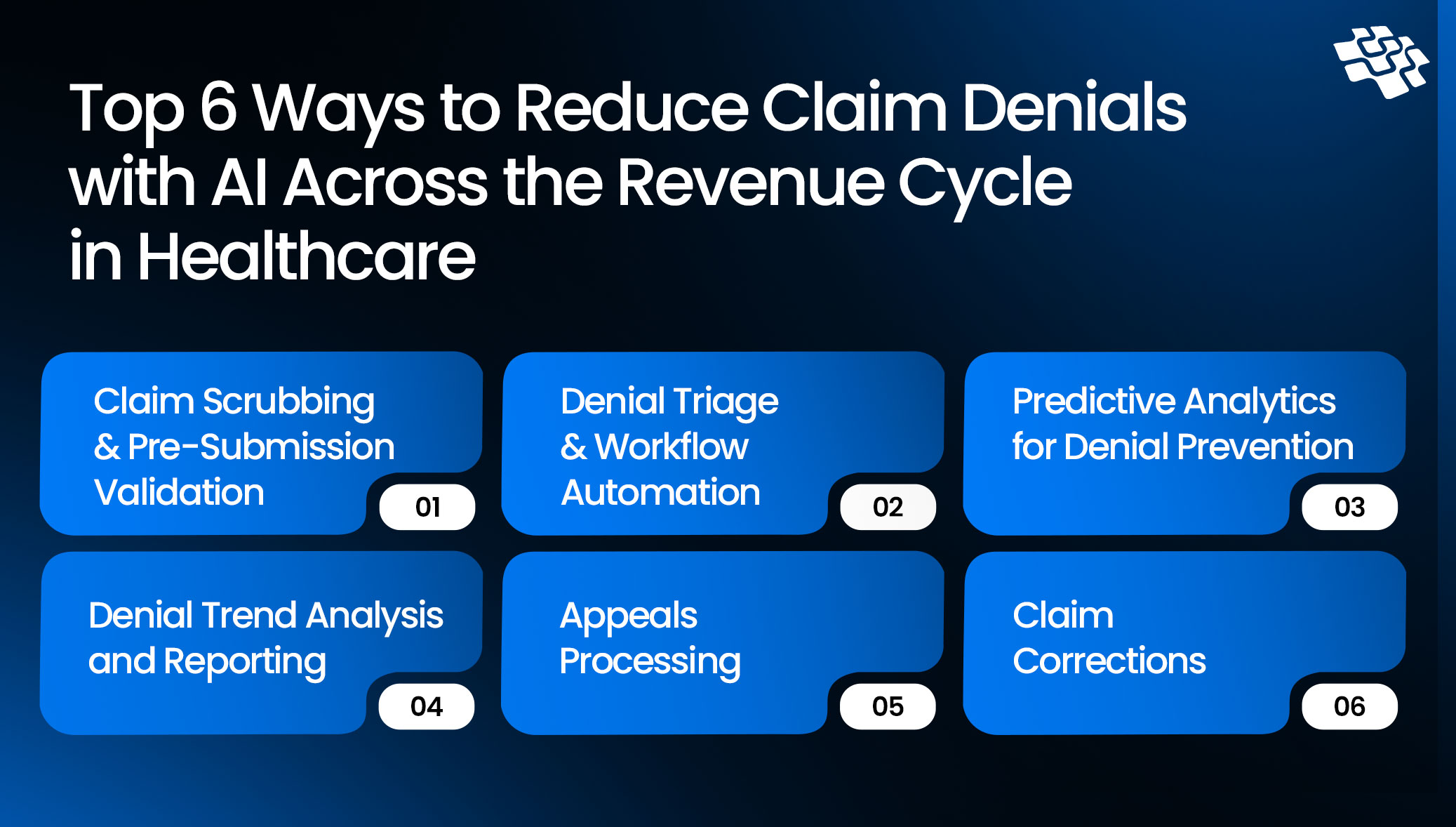
How to Reduce Claim Denials with AI Across the Revenue Cycle and Improve Healthcare Revenue Performance
AI has surfaced as a viable solution to this systemic challenge, especially as hospitals face escalating personnel expenses, increased scrutiny from payers, and administrative complexity...

AI Beyond the Hype: An Executive View on AI in Biopharma Data Ecosystems, Drug Discovery, and Value Realization
Why do so many AI initiatives in biopharma struggle to deliver real business value, despite massive investments in data, models, and technology? In this exclusive interview on AI in biopharma...

How AI in Patient Data Analysis Supports Early Detection, Better Treatment, and Improved Outcomes
Now organizations can manage vast amounts of patient data, including lab findings, clinical trial records, genomic data, medical records, and actual proof. AI is enabling clinicians to monitor...
Stay In the Know
Get Latest updates and industry insights every month.