How AI in Patient Data Analysis Supports Early Detection, Better Treatment, and Improved Outcomes


They know that the best outcomes come from learning together, and they practice collaboration and humility. That’s what successful organizations do. In this article, we’ll dive into the influence of patient data analytics in healthcare, exploring its benefits, key use cases, and the practical framework it provides for healthcare leaders and IT professionals as they prepare for the future.

Too Much Patient Data, Too Little Actionable Insight? Turn Fragmented Healthcare Data into Faster Clinical Decisions and Better Patient Outcomes
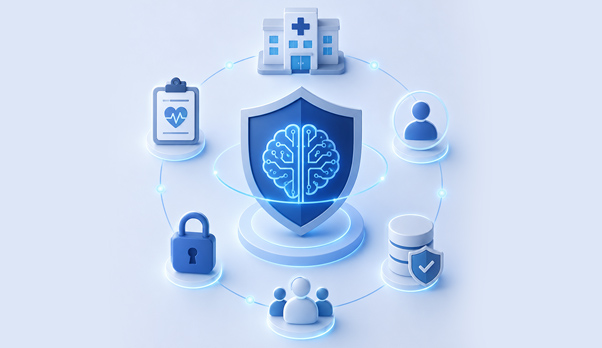
“AI’s role in modern medicine spans disease detection, personalized care, drug discovery, predictive analytics, telemedicine, and wearable health technologies. Leveraging machine learning and deep learning, AI can analyze complex data sets, including electronic health records, medical imaging, and genomic profiles, to identify patterns, predict disease progression, and recommend optimized treatment strategies.”- NCBI
How AI is Gathering, Examining and Safeguarding Patient Data
Healthcare institutions collect patient data from various sources such as EHRs, lab data, medical imaging, wearables, clinical notes, and genomic data. AI can analyze structured and unstructured data to identify patterns, assess risk, assist in diagnosis, and recommend personalized treatments.
Key precautions include:
- Data encryption during storage and transfer
- Data anonymization and de-identification
- Audit trail and continuous monitoring
- HIPAA and GDPR compliance actions
HIPAA says patient data cannot be shared or used without the patient’s consent. Research published in the International Journal of Telemedicine and Applications shows most patients do not know how their data is used or stored. Patients should understand how their information is used before signing up for health apps.
Challenges of Traditional Medical Data Management
The handling of healthcare data has always been a complex task. The volume, variety, and velocity of data generated in the healthcare industry often exceed traditional approaches. The need to record, keep, and access patient records, medical histories, treatment plans, and billing information has placed an immense load on healthcare providers.
- Data accuracy is one of the crucial issues. Manual data entry and processing errors can have serious effects on billing and patient care. Poor data quality can compromise the quality of care overall and lead to misdiagnoses, inappropriate treatments, and financial disparities.
- Data volume is another major issue. The amount of information generated by healthcare processes is substantial and is increasing at an accelerating rate. The information exists in multiple formats, comprising unstructured data (for instance, medical images and physician notes) and structured data (containing numerical values and coded entries).
- Another area where traditional approaches are inadequate is data integration. Healthcare providers often must use multiple databases and systems, which can make it difficult to pull the data together into one cohesive view. This fragmentation makes it more difficult to collect and evaluate data effectively, resulting in delays in decision-making and a lack of detailed insights.
Traditional healthcare data management systems face challenges such as data volume, data accuracy, and data integration. AI in patient data analysis is turning out to be a major change, and these problems need innovative solutions.
Why Healthcare Organizations Struggle to Make Timely Decisions from Patient Data
Why is data analysis important in healthcare? Let’s start with a basic thought experiment on interpreting healthcare data.
- An equation describing the course of treatment for one patient might involve numerous variables. They might include patient considerations, therapeutic methods, the abilities of the providers, facility resources, and many more.
- That’s where it gets even more tricky. Each of these factors is dependent on several other variables. For example, patient factors can be lifestyle choices, genetics, age, medical history, and much more.
As an artificial intelligence-based clinical decision support system provider, we have found that by employing data analytics approaches from mathematical fields such as topology and non-linear dynamics, we can start to grasp these patterns.
The Increasing Role of AI Healthcare Analytics
A recent survey found that Americans see the doctor an average of four times a year. A long wait to get an appointment is one of the elements that discourages patients from going to a hospital.
A robust healthcare system not only improves the well-being of citizens but also triggers the economy by saving valuable workers from downtime. It is no surprise that with the pace at which technology is advancing, the healthcare industry collects a vast amount of patient data. That data could lead to valuable insights for healthcare providers and even medical research.
AI healthcare analytics and big data have transformed the sector, changing it from a traditional structure to a flourishing, technology-driven one. Hospitals have gathered years of data. They don’t realize their data is an asset they can leverage to create data models and enhance clinical, operational, and revenue cycle functions.
Patient data further facilitates the clarification of the patient’s medical history and enables predictions about effects and risks of readmission. This brings better health outcomes for patients. It can also have an impact on the increase of reimbursements and regulatory compliance.
How AI Links Healthcare Data to Patient Care
AI is used to identify trends in healthcare data and insights that help providers steer the path of treatment. Health plans typically own the most extensive data due to their access to claims, consultations, diagnoses, and treatments from a variety of physicians and locations. However, in contrast to doctors, individuals frequently lack a comprehensive clinical background. They depend on the data provided by the patient during an appointment and their electronic medical record.
Patient data analytics in healthcare helps put those pieces together by aggregating data from hundreds of health plans, provider groups, and EMR systems. It also applies to surface insights immediately within the physician’s workflow.
- Industry research shows that the average time spent by doctors on electronic records in their clinical workflow is 16 minutes per patient.
The value is not only about giving care. Bringing together the most relevant data for health plans enables early treatment intervention and a greater ability to fill in gaps during the visit.
AI can help us better see patterns in data and current trends, but human judgement will always be key. For example, there is an important layer of clinical validation added when AI indicates that a patient should be referred to a specialist.
How to Use AI in Analyzing Patient Data
Artificial Intelligence can apply machine learning and deep learning algorithms to analyze patient data to uncover patterns, trends, and correlations that can be difficult for human analysts to see. This can lead to more accurate and personalized diagnostic treatment recommendations. Medical research, treatment plans, and patient outcomes can be improved and optimized by using AI to analyze data.
- Drug Discovery & Genomics: AI is utilized in drug research to uncover drug candidates by evaluating enormous data sets. AI can accelerate the drug development process by forecasting the effectiveness and safety of drugs from molecular interactions and genomic data.
- Patient Risk Stratification: AI can be used to assess the risk of a patient based on clinical, genetic, and lifestyle data. Risk stratification models can assist in identifying high-risk patients who may benefit from targeted health care efforts or early treatments.
- Predictive Analytics: AI-driven predictive algorithms analyze patient data to predict future health occurrences, such as hospital readmissions, disease progression, or medication compliance. These models can help healthcare workers take precautionary measures and improve patient treatment.
- Population Health Management: AI aids in the management of population health by detecting health trends, disease outbreaks, and hazards to public health. It helps to develop targeted interventions and prevention strategies to improve public health outcomes.
Key Benefits of AI in Patient Data Analysis for Healthcare Systems
AI in patient data analysis boosts clinical intelligence by translating diverse healthcare data into usable insights. These insights facilitate predictive decision-making, diagnostic accuracy, personalized therapies, operational efficiency, and enhanced patient outcome management.
1. Personalized Treatments
AI can analyze patient-specific data to help generate personalized treatment regimens tailored to an individual’s unique health needs. This method is different from the “one-size-fits-all” treatment strategy, leading to more effective and personalized interventions.
2. Resource Optimization
Patient data analytics in healthcare automates repetitive administrative tasks to help maximize healthcare resources and free up healthcare professionals to spend more time with patients. It also helps clinics and hospitals in predicting patient demand, which ensures better utilization of staff, facilities, and equipment.
3. Enhanced Diagnostic Accuracy
AI is frequently more accurate than human experts at identifying diseases and anomalies by analyzing patient data and medical images. Improved patient outcomes and survival rates result from earlier disease detection brought about by this increased diagnostic accuracy.
4. Cost Savings
AI can lower healthcare costs by automating processes, improving workflows, and lowering errors in diagnosis and treatment. Healthcare businesses can save costs while enhancing patient care by increasing accuracy and efficiency.
Administrative Burden and Inefficient Workflows Continue to Strain Healthcare Teams. Transform Patient Data into Real-Time Operational Intelligence
AI in Patient Data Analysis: High-Impact Use Cases to Solve Data Overload and Improve Patient Outcomes
AI is reshaping data operations in community health organizations through substantial advancements in patient data handling, predictive analytics for health outcomes, and the efficiency of administrative responsibilities. These are a few of the most significant applications of AI in this domain:
 1. Administrative Workflows Automation Across Patient Records
 1. Administrative Workflows Automation Across Patient Records
AI in patient data analysis services streamlines monotonous administrative duties, including scheduling and resource allocation, thereby improving operational efficacy and reducing costs.
- Appointment Scheduling: AI-driven scheduling minimizes scheduling conflicts, reduces wait times, and optimizes appointment booking through machine learning.
- Resource Allocation: Artificial intelligence uses real-time data and predictive analytics to optimize resource distribution, including staff, surgery suites, and hospital beds.
- Revenue Cycle Management: AI systems ensure accurate claim submissions and quicker reimbursement cycles by automating billing and coding procedures.
Better patient outcome prediction, more accurate and effective data management, and reduced administrative procedures are all results of integrating AI into data operations in community healthcare institutions.
2. Predictive Analytics for Patient Outcomes
By examining both historical and current data, AI-powered predictive analytics can forecast patient outcomes. This makes it possible to implement personalized treatment plans and proactive healthcare interventions.
- Predictive Modeling: To forecast outcomes like readmission risks, disease progression, and therapy responses, machine learning models examine patient data. For instance, it provides predictive analytics tools to help identify patients who are at high risk.
- Real-Time Monitoring: AI-powered systems utilize wearable technology to incessantly track patients’ vital parameters and foresee negative occurrences, such as heart failure or breathing complications, before their expression.
Early detection of high-risk patients enables prompt interventions, which improve patient outcomes and lower hospital readmission rates.
3. Early Disease Detection and Diagnosis
Healthcare professionals are all too frequently trapped in reactive mode, assessing and treating patients after their symptoms have become severe. However, they can switch to a proactive therapy framework with AI for early disease detection, modifying the course of patients’ health and saving lives.
- Chronic Disease Management: Artificial intelligence systems recognize patients vulnerable to hypertension and diabetes ahead of symptom onset.
- Cancer Diagnostics: AI imaging technologies can detect early-stage malignancies more reliably than traditional approaches.
- Neurological Disorder Detection: Artificial intelligence detects preliminary indicators of ailments such as Alzheimer’s and Parkinson’s through the examination of cerebral imaging and cognitive assessment information.
- Cardiovascular Disease Prediction: AI evaluates electrocardiograms, blood pressure readings, and lifestyle variables to determine the risk of heart disease and identify arrhythmias.
4. Population Health Trends Monitoring
The emergence of infectious diseases, localized outbreaks, spikes in infections after natural calamities, and unpredictable occurrences present a health threat to large populations. AI in patient data analysis can render these emergencies more controllable.
- AI models encourage proactive decision-making by offering insights into new health risks.
- It can detect patterns that indicate the emergence of disease outbreaks (like COVID-19), enabling government authorities to contain outbreaks.
- Predicting seasonal health trends, like yearly spikes in the flu, is another important use of AI models.
Governments and healthcare institutions can distribute resources, drugs, and vaccines to lower disease and prevent system overload because of advanced data analysis.
5. Effective Personalized Treatment Plans
Healthcare providers are increasingly looking towards personalized medicine to tailor treatment programs to patients. This strategy tailors care to a person’s lifestyle and medical history, as well as genetic makeup.
The problem is that to deliver this level of care, healthcare providers need to thoroughly evaluate tremendous patient-specific data. AI models are built for the purpose, but it is a labor-intensive and often infeasible process for a human.
- Artificial intelligence significantly contributes to the progression of one of the most transformative fields within current medicine: pharmacogenomics. This form of precision medicine examines the impact of genes on pharmacological reactions, revealing how an individual’s DNA can determine their response to a medication.
- AI-powered systems can check patients’ genetic profiles to determine which drugs work best or which ones could have negative side effects.
AI in patient data analysis enables more personalized and effective medicine. These systems instantly scan the patients’ data and figure out the most personalized treatment plans.
6. Value-Based Care & Population Health Management
For a long time, the U.S. healthcare system has been based on a fee-for-service model, in which doctors provide a service and are paid by health insurance. Fee-for-service, according to many experts, encourages the incorrect approach to healthcare by rewarding costly interventions and treatments rather than the care that would maintain patients’ health.
- Value-based care adopts a preventative strategy, emphasizing lifestyle changes that enhance general health. According to a study, 68% of doctors said that analytics are essential to receiving payment for value-based care.
Population health management examines the health outcomes of a particular demographic, such as the population that a hospital network serves or the inhabitants of a city. It would not be feasible without healthcare data analytics, which integrates patient and community health metrics.
7. Medical Imaging Analysis and Clinical Decision-Making
AI in medical imaging analyzes MRIs, CT scans, ultrasounds, and X-rays to detect abnormalities. These systems can recognize patterns that human radiologists might find challenging (often at earlier stages of disease progression).
AI-based decision support systems assist physicians by offering real-time, data-driven insights and suggestions. This also helps in:
- Enhancing diagnostic precision
- Supporting informed treatment planning
- Minimizing the risk of clinical errors
AI in patient data analysis is crucial for clinical decisions because of all these benefits.
Healthcare Data Should Accelerate Decisions, Not Create More Complexity. Discover How AI Helps Organizations Improve Outcomes While Reducing Operational Friction
AI Implementation Roadmap for Biopharma and Healthcare Organizations: From Data Readiness to Deployment
Most AI efforts fail because they are viewed as technology projects when they are organizational change initiatives, not because the technology is flawed. These are the procedures organizations with effective AI implementations regularly adhere to.
- Prioritize Clinical Objectives Over Data Volume: Define the precise clinical or business choice that you wish to enhance. A clearly defined problem indicates who makes the decision, what data they presently use, and what current information might enhance results and decision-making.
- Evaluate Data Integrity Before Model Selection: Make sure your healthcare data is comprehensive, easily available, and presented consistently before selecting AI tools or machine learning models. Biased or missing data sets can impact patient care outcomes and lower prediction accuracy.
- Align AI Techniques with Data Characteristics: Predictive analytics models are used for structured clinical data. Natural language processing is needed for unstructured text. Computer vision is needed for image analysis, and deep learning, advanced analytics, and machine learning methods are frequently used for genomic data.
- Test Models on Diverse Patient Cohorts: A model that works well in one healthcare environment might not work well in another. Before deployment, local validation using real patient data and healthcare systems is crucial.
- Establish Continuous Bias and Drift Monitoring: The performance of AI models can shift over time as patient demographics, clinical procedures, and healthcare systems change. Organizations can preserve prediction accuracy, lessen bias, and enhance care quality with the support of ongoing monitoring.
How NextGen Invent Enables Smarter Healthcare Decisions with AI-Powered Data Analysis
NextGen Invent provides innovative artificial intelligence-based clinical decision support system software, specifically designed for the healthcare sector, enabling organizations to leverage patient data for enhanced predictions, customized treatment strategies, and more operational effectiveness. This is how we can help:
- Tailored AI Model Development: Based on your patient data, our AI data scientists develop customized AI models for healthcare requirements, such as predictive analytics, AI for early disease detection, and individualized treatment plans.
- Seamless EHR Integration: We integrate AI into your electronic health record systems. This facilitates the enhancement of data from various sources and streamlines clinical processes for immediate decision-making.
- Advanced Risk Prediction Capabilities: Our team develops predictive algorithms to anticipate patient risks, enabling timely treatment for chronic conditions such as diabetes and cardiovascular disease. This results in improved patient outcomes.
- Robust Data Security Frameworks: We ensure that all AI deployments adhere to HIPAA and GDPR to protect patient information and maintain security during the AI procedure.
Healthcare organizations can unlock the full potential of AI by partnering with NextGen Invent. Our expertise helps transform complex patient data into actionable insights that drive informed decisions, optimize clinical workflows, and improve patient outcomes. Whether you’re exploring AI adoption or scaling existing initiatives, we provide the strategic and technical support needed to accelerate success.
Ready to harness the power of AI-driven patient data analysis? Connect with our experts to discover how we can help you achieve your healthcare innovation goals.
Conclusion
Patient data analytics in healthcare is transforming the healthcare industry, with organizations detecting diseases early, personalizing treatments, and having more accurate patient outcomes. AI can assist healthcare providers in analyzing enormous amounts of clinical, imaging, genetic, and real-world patient data to make evidence-based choices rapidly and eliminate operational inefficiencies. Its uses are expanding across the healthcare ecosystem, from risk prediction and diagnostic support to community health management.
As healthcare data becomes more complicated, the ability to translate information into actionable insights will be a critical competitive differentiator for healthcare providers and life sciences enterprises. Emerging technologies such as remote patient monitoring software development are broadening the scope of AI by providing ongoing patient monitoring, proactive treatment, and enhanced long-term care management. Organizations that are proactively leveraging AI today will be better positioned to deliver high-quality, data-driven care and improve clinical outcomes and operational excellence in the years ahead.
Frequently Asked Questions About AI in Patient Data Analysis

“The real value of AI in healthcare lies not in processing more data, but in transforming complex patient information into timely, actionable insights. Organizations that successfully operationalize AI will improve early detection, personalize treatment decisions, and deliver better patient outcomes at scale.”
Michael Kaminaka

Chief Growth Officer
Related Blogs
How to Reduce Claim Denials with AI Across the Revenue Cycle and Improve Healthcare Revenue Performance
AI has surfaced as a viable solution to this systemic challenge, especially as hospitals face escalating personnel expenses, increased scrutiny from payers, and administrative complexity...

AI Data Governance in Healthcare: How Poor Data Quality Is Affecting Patient Outcomes in Healthcare
AI data governance in healthcare creates guidelines, protocols, and accountability frameworks that regulate the management of patient data across an organization, from collection to archiving.

How an Intelligent Medical Coding Platform Improves Accuracy, Compliance, and Replaces Traditional Coding Systems
Healthcare revenue cycle management requires quick and precise clinical coding, ICD-10 coding, and CPT coding. However, just 14% of US suppliers reported using revenue cycle management AI...
Stay In the Know
Get Latest updates and industry insights every month.