NextGen Invent Joins Innovators’ Network at American Heart Association® Center for Health Technology & Innovation

See the Press Release

What Is AI Governance?

Enterprise AI Governance Services

AI governance is the set of policies, controls, accountability structures, and oversight processes that ensure AI systems are designed, deployed, and supervised responsibly, in compliance with regulations and aligned with organizational values. As enterprises scale AI adoption, they face mounting challenges around risk, compliance, transparency, and accountability. Without a structured governance framework, AI initiatives can create regulatory exposure, operational failures, and reputational damage that compound over time. Our comprehensive AI governance services cover:

  • Governance Structures: Who owns AI decisions, and how oversight is organized
  • Risk Management: How AI-specific risks (bias, drift, data privacy, security) are identified and mitigated
  • Compliance Obligations: How AI systems meet regulatory requirements (EU AI Act, HIPAA, GDPR, ISO 42001, NIST AI RMF)
  • Operational Controls: How policies are enforced throughout the AI lifecycle

NextGen Invent helps enterprises build governance frameworks that enable AI innovation while maintaining control, trust, and regulatory compliance.

AI Governance Maturity Assessment

We help enterprises evaluate the effectiveness of their AI governance framework across people, policies, procedures, and technology platforms. Our assessment examines governance capabilities at every stage of the AI lifecycle. We also provide a clear maturity score and actionable recommendations for improved compliance, risk management, and responsible AI governance. Assessment areas:

  • Governance Operating Model
  • Model Lifecycle Governance
  • AI Data Governance

Governance Strategy, Framework & Policy Development

A strong AI governance plan sets up the rules, guidelines, and safeguards needed to handle AI responsibly on a large scale. Our AI governance team develops governance frameworks, policies, and controls that support ethical AI use, accountability, transparency, risk management, and compliance, empowering businesses to confidently expand AI projects. What we deliver:

  • Accountability, Roles & Oversight Framework
  • Privacy Governance Policies
  • AI Transparency & Trust Frameworks

AI Risk, Bias & Ethics Management

An essential component of AI risk management is threat modeling. We recognize, evaluate, and reduce the risks associated with AI systems, such as failures, data privacy issues, model drift, explainability, bias, vulnerabilities, and operational resilience gaps. Our experts help enterprises in identifying, assessing, and mitigating AI-related risks through systematic evaluations and bias assessments. What this includes:

  • Risk Assessment & Threat Modeling
  • Bias, Fairness & Ethics Evaluation
  • Data Risk Management & ISO 42001 Alignment

AI Regulatory Compliance Services

AI compliance services are necessary to navigate the constantly changing AI regulatory environment. Our AI governance team evaluates AI systems against applicable laws, industry standards, and governance criteria. We also ease responsible AI deployment while enhancing transparency, accountability, audit readiness, and compliance across regulated contexts. What we cover:

  • Compliance Readiness Assessment
  • Audit Support & Documentation
  • GDPR, HIPAA, EU AI Act & ISO 42001 Analysis

Multi-Modal AI Governance

Consistent oversight and governance are necessary when managing several AI models across platforms, providers, and business processes. We build unified governance frameworks that standardize controls, improve model transparency, strengthen risk management, and ensure accountable AI operations across diverse AI ecosystems. What we deliver:

  • Multi-Modal Oversight Frameworks
  • Centralized Controls and Policies Management
  • Explainable AI (XAI) Monitoring

Generative AI Governance

Generative AI introduces unique risks like hallucination, data leakage, intellectual property exposure, and uncontrolled model behavior. Our AI data experts design governance guardrails specific to LLMs and RAG systems. We also handle risks about data usage, transparency, and AI-generated outputs. What this includes:

  • Guardrail Design & Policy Framework
  • GenAI Usage Monitoring and Controls
  • Data Privacy and Output Transparency

80% of AI Projects Fail Due to Poor Governance. Uncover Risks Before They Impact Compliance and Performance

What Our Customers Have to Say?

Although we are technology investors, we prefer to bring in experts for due diligence to ensure we don't miss anything. We connected with NextGen Invent and asked them to review the company's AI technology infrastructure, processes, and data to identify any potential red flags. The team did an excellent job. We particularly appreciated their flexibility, professionalism, and swift responses.

Nina Ni

Associate - Venture Capital and Growth Equity

How We Implement AI Governance: Our 6-Step Process

Discovery & Scoping

Firstly, we map your AI landscape, including models, data sources, use cases, and regulatory obligations.

Maturity Assessment

We evaluate governance readiness across policies, processes, and technology, then score maturity against benchmarks.

Framework Design

We architect a governance framework, roles, review processes, risk taxonomies, and compliance mappings.

Policy Development

Our experts then draft governance policies, usage guidelines, model documentation standards, and escalation procedures.

Implementation & Integration

We also deploy governance controls into existing workflows, tools, and AI platforms.

Monitoring & Improvement

Our AI governance team establishes KPIs, audit cadences, and feedback loops to keep governance aligned with evolving regulations.

Risks of Ungoverned AI: What Happens When AI Governance Is Missing?
Regulatory Non-Compliance

EU AI Act violations can reach up to €35 million or 7% of global annual turnover. Companies are under pressure to follow data protection laws, algorithmic transparency requirements, and industry-specific restrictions.

Sensitive Data Leakage

Employees paste customer SSNs, proprietary source code, and confidential legal documents into AI tools like ChatGPT and Claude. Without any scanning layer or blocking mechanism, HIPAA and GDPR violations occur with penalties that can escalate to millions.

Algorithmic Bias & Discrimination

Ungoverned models can cause ethical issues, including bias, discrimination, and unfair treatment inside AI systems. This oversight gap could expose the organization to litigation and reputational damage.

Security Vulnerabilities

AI systems are vulnerable to cybersecurity threats, such as data breaches, prompt injection, and model theft. These risks have the potential to cause financial loss and harm to customer relationships if there is no governance.

Public Mistrust

63% of consumers say they would stop using a product if they learned its AI was making unfair decisions. Uncertainty and skepticism are worsened by a lack of governance, which prevents AI technology from being widely adopted.

Missed Opportunities for Innovation

Although governance is essential to advancing Trusted AI, an unclear framework could hinder innovation. Teams become risk-averse, legal blocks deployments, and AI projects stall without clear guardrails.

Most Organizations Can't Explain How Their AI Makes Decisions. Identify Governance Gaps and Unmanaged Risks Before They Become Business Liabilities

AI Governance Use Cases Across Industries

Clinical Decision Support

AI evaluates clinical guidelines, medical documents, and patient data to offer healthcare practitioners recommendations. AI governance framework reduces AI-driven errors by ensuring precise suggestions and objectives. Intelligent models can predict hospital readmissions, disease progression, and more. Enterprise AI governance services prevent biased forecasts and ensure the safe, efficient application of AI-driven insights by enforcing fairness, data integrity, and compliance.

Clinical Decision Support Use Case

Maintaining Documentation and Audit Trails Use Case

Maintaining Documentation and Audit Trails

Monitoring model versions, overrides, training data, and performance logs is essential for traceability. Comprehensive documentation ensures compliance, operational transparency, and incident analysis in regulated industries. With AI compliance services, organizations can effectively rebuild decision-making processes and identify the root causes of failures by maintaining comprehensive audit trails. Robust documentation demonstrates sound system management practices and fosters stakeholder trust.

Digital Twins to Accelerate Clinical Trials

Artificial intelligence-powered virtual patient models optimize drug testing, clinical trial design, and therapeutic approaches. AI governance services improve the trustworthiness of AI-assisted trials by ensuring regulatory compliance, protecting patient data, and reducing bias issues.  

Digital Twins to Accelerate Clinical Trials Use Case

Credit Scoring and AI Risk Assessment Use Case

Credit Scoring and AI Risk Assessment

Artificial intelligence develops credit scoring models that are more dynamic and accurate. To evaluate a person’s creditworthiness, these models can process a wider range of data, including non-traditional sources like mobile phone usage or rental payment histories. Financial organizations can use AI to implement high-frequency trading algorithms that instantly adapt to market changes. These algorithms are based on predictive analytics and past trends and evaluate vast amounts of market data to make trading decisions with the goal of maximizing profits.

Data Privacy and Ethical Use of Patient Information Policy

With data privacy laws and AI-specific regulations like HIPAA, GDPR, the EU AI Act, FERPA, COPPA, etc., these data governance policies specify how AI systems ensure the ethical, confidential, and secure management of sensitive patient data. Healthcare organizations must establish contractual duties for third-party AI providers to protect patient data and enforce data minimization and de-identification standards.

Data Privacy and Ethical Use of Patient Information Policy Use Case

Sub-Industries We Serve

Icon
Healthcare
Icon
Life Sciences
Icon
Manufacturing
Icon
Finance
Icon
Insurance

NextGen Invent’s Enterprise AI Governance Framework

Our framework covers six governance domains that span business strategy, technical architecture, data management, and financial oversight:

Business Demand & Policy Governance

Prioritize AI projects with the greatest investment impact and align with strategic objectives. We develop prioritization criteria, decision-making processes, and investment tracking so every AI initiative ties to measurable business value.

Technical Governance & AI Architecture Oversight

Clearly describe the architecture, implementation, and AI techniques. We establish architectural standards for AI deployment by setting technical direction, managing AI demand, and enforcing authorized tools and frameworks.

Data Stewardship & Quality Governance

Build trust in AI through strong data governance processes. We maintain current critical metadata, data quality, lineage tracking, and resolve data issues that impact AI reliability and performance.

AI Review & Architecture Assurance

Validate AI initiatives through structured review gates. Our governance checkpoints evaluate governance risks by providing oversight mechanisms to evaluate AI solutions, architectural choices, and implementation approaches.

Program Governance & Performance Management

Create centralized coordination, reporting, and progress tracking to improve transparency across AI initiatives. We build reporting structures, progress tracking, and cross-team collaboration mechanisms that bridge business and technical stakeholders.

Financial Oversight & Value Realization

Our enterprise AI governance framework allows for financial management and cost monitoring, helping enterprises get the most out of AI initiatives while ensuring accountability and control.

Why Enterprises Choose NextGen Invent for AI Governance Consulting Services?

Govern AI Before Regulators Ask Questions

Build governance documentation and evidence trails that support regulatory review for the EU AI Act, HIPAA, and ISO 42001.

Data Quality, Traceability & Model Accountability

Improve AI trustworthiness by data governance, auditability, metadata management, and decision traceability.

AI Review Boards & Control Gates

We implement structured review mechanisms, approval workflows, and governance checkpoints to evaluate AI initiatives.

Business-Aligned, Not Just Compliance-Driven

Build frameworks that align governance decisions with business objectives, investment priorities, and risk tolerance.

Cross-Functional Design

Establish collaboration across business leaders, data stewards, compliance stakeholders, and program offices to enable sustainable AI adoption at scale.

Real-World AI Governance Impact: Our Case Studies

Your Teams Are Adopting AI. Is Everyone Following the Same Rules? Create Consistent Policies, Controls, and Decision-Making Processes Across Your AI Ecosystem

AI Governance Services Related Blogs

AI Data governance in healthcare use cases

AI Data Governance in Healthcare: How Poor Data Quality Is Affecting Patient Outcomes in Healthcare

AI data governance in healthcare creates guidelines, protocols, and accountability frameworks that regulate the management of patient data across an organization, from collection to archiving.


Read More >>

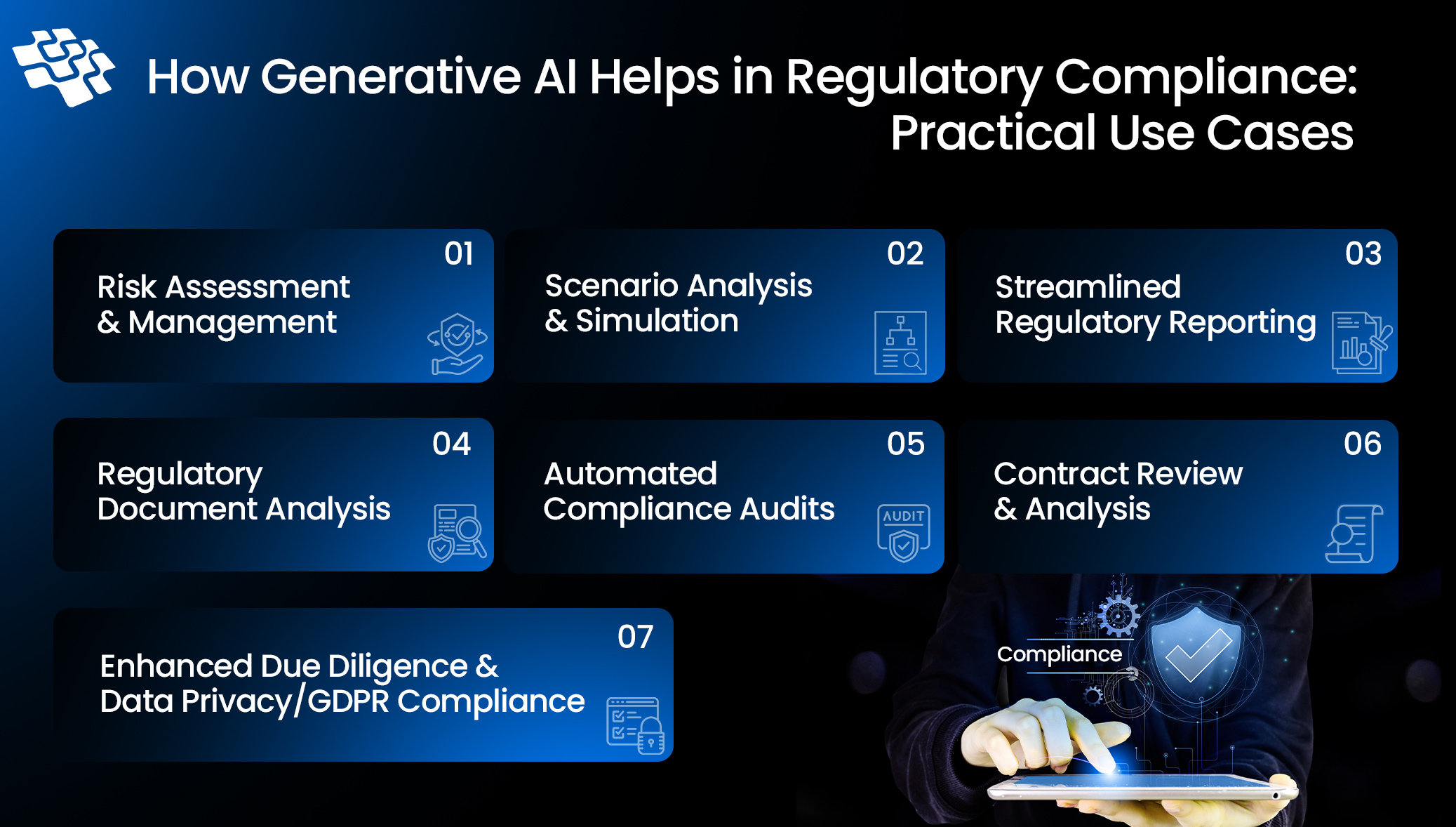
Generative AI for regulatory compliance use cases

Generative AI for Regulatory Compliance: How Businesses Use It for Automation and Risk Management in 2026

Ineffective preparation and compliance checks often result in months-long delays. In addition to managing audits, training, vendor compliance, and incident reporting, they are buried under...


Read More >>

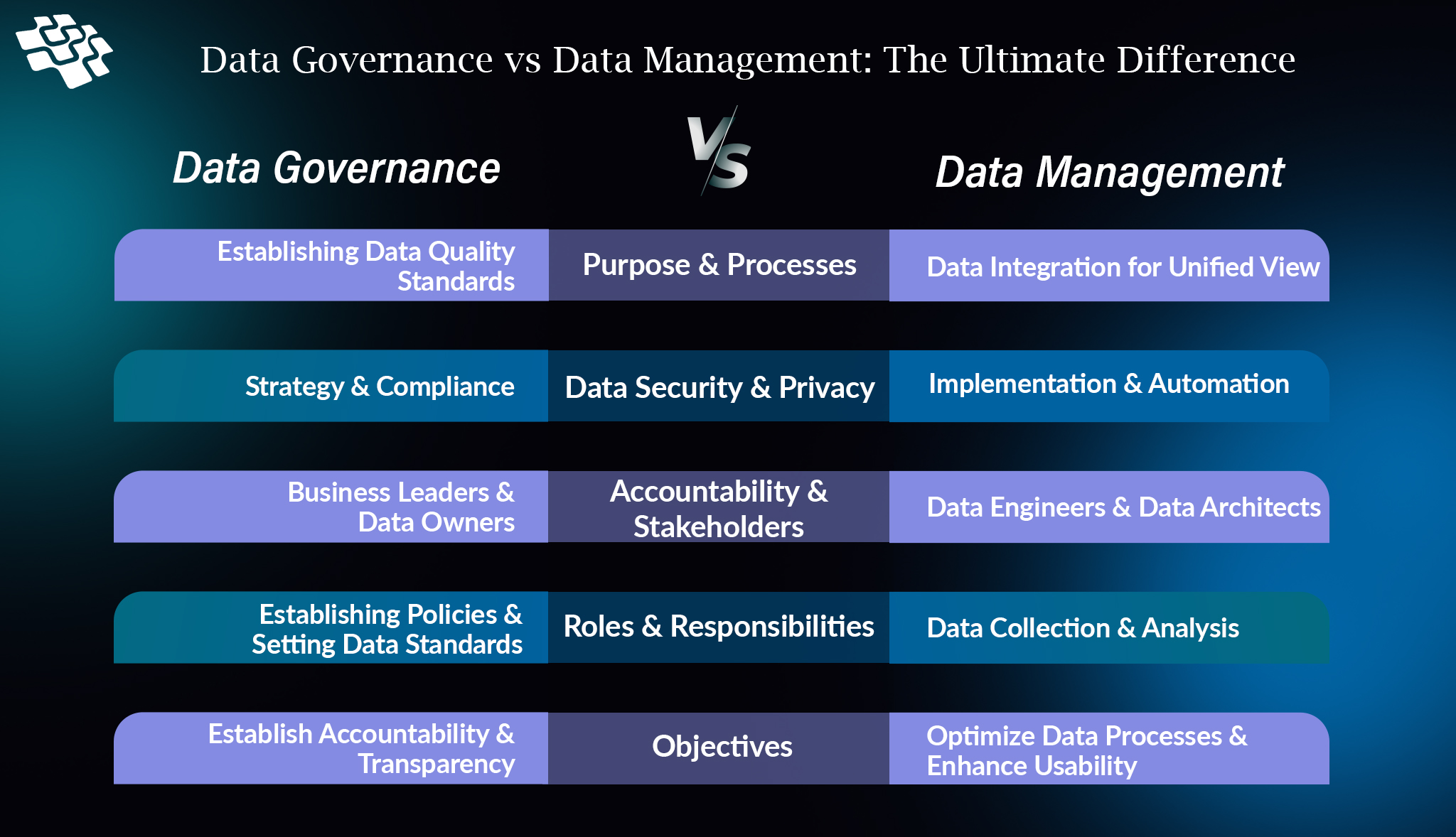
Data Governance vs Data Management

Data Governance vs Data Management: The Ultimate Comparison

Organizational structures, data owners, rules, procedures, business language, and metrics for the entire lifecycle of data are all defined by data governance.


Read More >>

Frequently Asked Questions About AI Governance Consulting Services

What are AI governance services?
AI governance services help organizations design, implement, and maintain the frameworks, policies, and controls needed to manage AI systems responsibly at scale. This typically includes governance maturity assessments, policy development, risk management, compliance mapping, and ongoing monitoring across the AI lifecycle.
There are five key reasons: The primary reason is to ensure fairness and equality and prevent biased results. Second one is to increase stakeholder confidence via transparency and responsibility. Third reason is to recognize and reduce risks to both users and the organization. Fourth priority is to follow legal and regulatory mandates. The fifth reason is to ensure that AI applications adhere to ethical principles.
AI ethics defines principles like fairness, transparency, accountability, and non-harm. AI governance operationalizes those principles through enforceable policies, oversight structures, risk processes, and compliance controls. Ethics answers “what should we do?” Governance answers “how do we ensure it happens, consistently, at scale?”
AI governance frameworks support HIPAA and GDPR compliance by implementing data usage norms, access controls, documentation standards, and model oversight. Throughout the AI lifecycle, they ensure that AI systems handle sensitive data responsibly, uphold transparency, and follow privacy and security requirements.
The five foundational pillars of an enterprise AI governance program are: accountability, transparency, fairness, compliance, and risk management.
AI governance sets up the rules, oversight, and accountability frameworks that govern the development, implementation, and monitoring of AI systems to ensure decisions are compliant with organizational goals. AI security shields those systems from risks, misuse, and illegal access. Data governance oversees the lifecycle, quality, and accessibility of the data that AI systems rely on. In short, security protects responsible AI use; data governance maintains the reliability of the underlying data, and AI governance specifies what responsible AI governance looks like.
AI governance promotes responsible AI by ensuring that ethical standards, risk management procedures, and regulatory requirements are incorporated into the development and application of AI systems. As AI usage increases, AI governance helps businesses minimize bias, enhance transparency, and uphold accountability through explicit regulations and decision-making frameworks. This allows teams to implement AI successfully while controlling risk and upholding regulatory, employee, and consumer trust.
Yes. The EU AI Act mandates governance requirements for high-risk AI systems, including risk assessments, documentation, human oversight, and conformity assessments. NIST AI RMF provides a voluntary US framework. ISO/IEC 42001 sets up an international standard for AI management systems. Industry-specific regulations (HIPAA, GDPR, financial services rules) impose additional requirements on AI systems handling sensitive data. Organizations operating globally need governance frameworks that address multiple regulatory regimes simultaneously.