How AI Predictive Diagnosis Helps Detect Diseases Earlier and Improve Clinical Decision-Making


Clinicians still have too much administrative burden. There are still many important insights buried in fragmented systems. Manual reviews are still leading to diagnostic delays. Teams can’t analyze data fast enough to keep up with exploding data volumes. Expectations and operational realities are diverging. An artificial intelligence-based clinical decision support system fills this gap by analyzing medical data at scale, identifying trends early, and providing physicians with actionable insights.

Missed Diagnoses and Delayed Interventions Put Patient Outcomes at Risk. Use AI Predictive Diagnosis to Identify High-Risk Cases Earlier and Improve Clinical Decisions
What Is AI Predictive Diagnosis?
The use of AI predictive diagnosis in healthcare has been a significant help in preventive medicine. AI models’ prediction of the course of the disease and diagnosis has led to early intervention and improved patient care. Machine learning algorithms in AI systems have demonstrated the ability to predict patient outcomes and disease risks by analyzing historical data and constant patient monitoring.
Artificial intelligence in predictive diagnostics is also relevant for the management of chronic diseases, in which AI algorithms predict complications and exacerbations before they become serious. This is particularly useful in diseases such as diabetes and cardiovascular disorders where early detection of potential complications can significantly change the course of treatment and patient outcome.
Furthermore, AI predictive analytics in healthcare enables customized treatment by examining large volumes of data to identify subtle trends that might not be apparent to the naked eye. This enables medical practitioners to create treatments specific to the patient’s genetic makeup and symptoms.
How Does AI Predictive Diagnosis in Healthcare Work: AI at the Frontline of Accurate Diagnosis
Within the healthcare domain, artificial intelligence can effectively handle complex data with the use of neural networks, deep learning, and machine learning techniques. Unlike traditional systems, AI can:
- Evaluate numerous imaging files and medical records in just a few seconds.
- Spot delicate patterns invisible to human scrutiny.
- Combine multimodal data (lab tests, imaging, genomics, lifestyle data) to produce predictive insights.
Here are numerous examples of AI predictive diagnostics in action.
- Breast Cancer Detection: AI-assisted mammography increases the chances of detecting breast cancer in its initial stages and reduces the rate of false negatives by detecting tumors that are smaller than a millimeter.
- Unusual Disease Alert: Machine learning uses differences in patients’ data to give clinicians early warning signs of anomalies.
- Predicting Cardiac Disease: Algorithms help to analyze cardiac imaging, electronic health records, and lifestyle data to predict heart attacks or heart failure and hence promote preventive strategies.
An artificial intelligence-based clinical decision support system enables decision-making, as clinicians can focus their efforts on treatment planning and interpretation instead of dealing with data analysis.
What Data Is Used in AI Predictive Diagnosis?
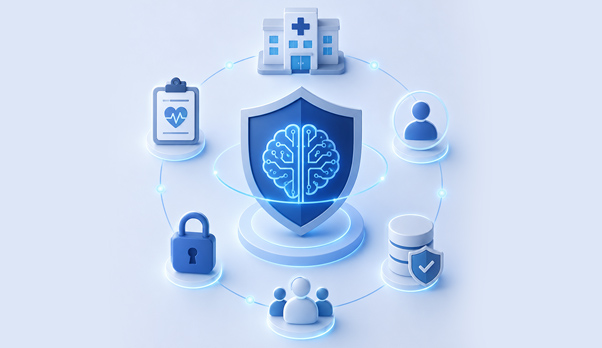
Two crucial factors in determining the usefulness of AI diagnostics are the quality of patient data and the protection of patient data. AI algorithms must learn, adapt, and deliver reliable results on large and heterogeneous data sets, often obtained from electronic health records (EHRs). However, healthcare professionals have several responsibilities because of the sensitive patient data they rely on.
- Patient data should be protected from abuse and illegal access by encryption, anonymization, and strict access control.
- Full security measures should be applied.
- Healthcare organizations must ensure that their AI systems comply with applicable data privacy legislation to protect patient confidentiality and trust.
Data used in AI predictive diagnosis is a crucial factor in the ongoing development of AI predictive diagnosis. This will enable researchers, technology vendors, and healthcare professionals to share data and collaborate in a secure way. Thereby speeding up the development of more accurate and efficient AI algorithms.
Explainability and transparency are also necessary. Health practitioners must understand how AI systems make decisions, especially when it comes to decisions that impact patient care. AI systems must be constantly updated and maintained to ensure they are accurate and effective as new information is learned, and healthcare recommendations evolve.
Check Our Case Study: Clinical Trial Supply Chain Intelligence to Improve Forecasting, Drug Availability & Operational Efficiency
Why Predictive Diagnostics Is Surging in Demand
The healthcare industry is rapidly changing in its structure, in response to new demands and expectations.
- Need for faster decision-making to keep up with increasing clinical complexity: Acute diseases, cancer, metabolic diseases, and cardiovascular disease need early detection to prevent their progression.
- Global shortages in all medical specialties: Burnout is severe for teams in emergency care, pathology, and radiology. AI scales capacity without scaling people.
- The explosion of medical data across the continuum of care: Wearables, sensors, genomics, labs, and imaging all generate massive volumes of data that are just too big for humans to process.
- More focus on patient safety and diagnostic accuracy: Reducing errors and open decision-making are high on the list for governments and health care quality organizations.
These forces are driving healthcare organizations to embrace technology that can provide greater precision, earlier insights, and intelligent support of clinical workflows.
What Are the Main Benefits of AI Predictive Diagnosis for Hospitals and Patients?
The benefits of AI predictive diagnosis for patients and hospitals are:
- Data-Driven Clinical Decision Support: Natural language processing enables healthcare providers to extract insights from unstructured notes and reports in EHRs to build finer risk profiles for individual patients. This integrated view of patient data supports the development of personalized treatment plans and enhances clinical decision-making.
- Detection of Disease: AI predictive diagnosis, using data from medical histories, imaging, medication records, and data from wearable devices, can identify potential health problems years before symptoms appear. Using deep learning for image analysis and continuous monitoring can help health professionals detect subtle disease symptoms that cannot be detected by traditional diagnostic methods.
- Proactive Care for Improved Patient Outcomes: Utilize real-time health monitoring and predictive analytics in healthcare to design tailored, proactive care plans. This approach is to deal with the disease at an early stage, and not to wait for the advanced symptoms and respond to the disease at a more advanced stage. It results in a longer patient lifespan and a better quality of life for the patient.
AI-Powered Diagnostic Tools and Technologies
AI predictive diagnosis in healthcare is no longer an illusion and is already being used in hospitals and labs. It’s transforming the way diseases are diagnosed and how long it takes to diagnose them by analyzing imaging and identifying rare DNA mutations. They apply big data, neural networks, and machine learning to provide scalable, accurate, and fast solutions for a wide range of disciplines.
1. AI in Genomics
Diagnostics is where AI meets genomics, giving rise to a new wave of precision medicine. You can’t interpret billions of data points that exist in each genome manually. And this is where AI in medical diagnosis comes into play. Sequencing data can be analyzed using machine learning models. It identifies rare mutations, disease-related signatures, and polygenic risk scores for diseases such as diabetes, cardiovascular disease, and cancer.
Diagnostics are becoming more integrative, combining genetic insights with AI medical imaging for a more complete picture of structural and molecular data, and allowing more personalized therapies.
2. AI in Liquid Biopsy Analysis
Liquid biopsy, testing blood for disease-associated biomarkers, has become popular, especially in oncology. AI in predictive diagnosis can identify the disease at an earlier stage than traditional methods through the analysis and interpretation of complex signals from circulating tumor DNA (ctDNA), exosomes, or microRNAs. This is particularly the case in cancers such as lung, pancreatic, or ovarian, where early detection can significantly improve outcomes. AI can accurately predict the presence of a disease or risk of recurrence by looking at tiny molecular signatures in a blood sample.
Artificial intelligence–based liquid biopsy tools personalize every step in the treatment pathway, not just detection. Machine learning in medical diagnosis helps in risk stratification of patients by evaluating biomarker profiles and guides treatment decisions.
3. AI for Drug Response Prediction
AI in medical diagnosis is changing treatment planning in pharmacogenomics by changing the way doctors write prescriptions. Gene-drug interaction analysis can help predict the patient’s drug metabolism, adverse effects, and chances of successful treatment.
In oncology, AI diagnostics can recognize patterns of resistance in tumors and assist doctors in choosing the most effective therapies early. It improves the treatment of psychiatric patients by personalizing antidepressant prescriptions based on their genetic markers.
Clinical Teams Can't Afford to Miss Early Disease Signals. Empower Care Providers with AI Predictive Diagnosis That Supports Faster, Data-Driven Decision-Making
AI Predictive Diagnosis Use Cases Across Hospitals, Clinics, and Remote Care
Missed disease signals, late-stage diagnoses, treatment inefficiencies, and preventable hospitalizations continue to impact patient outcomes and healthcare costs. AI predictive diagnosis helps solve these challenges by uncovering hidden patterns across EHRs, medical images, lab results, and monitoring data before they become clinically evident.
Below are five AI predictive diagnosis use cases in hospitals that demonstrate how predictive AI is transforming care delivery.
 1. Early Disease Detection and Risk Prediction
 1. Early Disease Detection and Risk Prediction
Machine learning and artificial intelligence algorithms can analyze medical data and detect the early signs of disease before it worsens. Early detection is important for diseases like cancer, where a late diagnosis can often be fatal. AI systems can detect subtle differences in data that human clinicians would not notice, allowing for earlier and more accurate diagnoses.
- For example, in oncology, AI can detect small cancers or abnormalities in imaging studies, which can lead to earlier treatment and better outcomes.
AI can also be used in cardiology to analyze patterns of heart rate data to monitor cardiac rhythms and predict the chances of a heart attack or stroke.
2. AI-Powered Virtual Health Assistance
Virtual health assistants provide every individual with personalized medical assistance 24/7. Virtual health advisors are virtual medical advisors that provide contextual medical information to help users understand the complexities of healthcare, symptoms, and appointments. AI has accelerated drug development and transformed the pharmaceutical industry. It employs advanced algorithms to process extensive data sets, spot potential drug candidates, and forecast their effectiveness and safety.
Artificial intelligence is streamlining manufacturing, perfecting the design of clinical trials, and bringing personalized therapies. It also enables real-time data analysis, leading to a reduction in costs, time-to-market, and improved patient outcomes in drug development by overcoming challenges such as data privacy, regulatory compliance, and integration.
3. Personalized Treatment and Care Planning
The convergence of AI and precision medicine is transforming healthcare, delivering personalized care based on patient needs. Better intelligence through AI’s advanced computational capabilities helps clinicians’ decision-making and characterization of unique phenotypes. The integration of genetic, nongenomic, and patient-specific data (such as symptoms, clinical history, and lifestyle) will improve individualized diagnosis and prognosis.
AI predictive diagnosis in healthcare helps to interpret genetic data to find mutations or variants linked to specific diseases. For example, AI can evaluate genetic predisposition to conditions such as cancer, diabetes, or heart disease and recommend preventive measures or personalized treatment plans.
4. Faster Drug Discovery and Repurposing
AI is accelerating the drug discovery process by evaluating biological data to forecast which compounds are most likely to be successful against diseases. It also helps find existing drugs that can be used to treat new diseases. This saves time and costs compared to traditional drug development methods.
The ability of AI models to forecast how medications would affect cells, tissues, and organs makes this feasible.
5. Remote Patient Monitoring and Early Intervention
Wearable technology and AI-based remote monitoring health technologies provide the means for routine health monitoring of patients from anywhere. AI looks at the data from devices that measure blood pressure, heart rate, and glucose levels to provide real-time insights into a patient’s health. Continuous remote patient monitoring can identify early signs of problems, reduce hospital readmission rates, and enable timely interventions.
In conclusion, AI is completely changing the healthcare industry:
- Better diagnosis of patients
- Drug development is safer and quicker
- Treatment plans are more personalized
Late Diagnoses Impact Both Patient Outcomes and Healthcare Costs. Adopt AI Predictive Diagnosis to Detect Diseases Earlier, Identify High-Risk Patients, and Improve Clinical Decision-Making
AI Predictive Diagnosis in Medical Imaging: Beyond Traditional Diagnostic Methods
Artificial intelligence is transforming diagnostic radiology by enhancing traditional medical imaging methods. AI predictive diagnosis software development services can evaluate medical images with accuracy never seen. These advances improve workflow and outcomes for emergency physicians and burn specialists. Advanced imaging equipment can process large volumes of complex data and search for patterns or subtle anomalies that are hard for humans to detect.
AI accelerates decision-making in critical circumstances such as assessing the depth of a burn or diagnosing internal trauma. The integration of image classification and segmentation could allow AI-powered systems to distinguish superficial from full-thickness burns, providing valuable information.
Important developments in imaging technology consist of:
- Automated Image Segmentation: Determines and measures damaged regions for targeted therapy.
- Predictive Analytics in Healthcare: Forecasts the course of wound healing, allowing for customized treatments.
- Wearable Integration: Gathers data in real time to track the development of wounds remotely.
How Hospitals Can Implement AI Predictive Diagnosis: Implementation Roadmap
The benefits and applications of AI predictive diagnosis in real-world scenarios are discussed, but it is not clear how health care organizations can start using AI in their daily work. That may sound complicated, but businesses don’t have to wait long to see the benefits of AI-powered prediction technology.
The first thing to do is;
- Assess Your Needs First: Assess your current systems to identify where AI predictive diagnostics can make the most difference.
- Choose the Right Partner: Work with an expert AI predictive diagnosis consulting services provider to help you select and deploy the right solutions for your needs.
- Customization and Integration: Make sure the AI solution can be tailored to your specific needs and integrates smoothly with your current systems to minimize disruption.
Future of AI-Powered Diagnostics and Predictive Healthcare
Predictive data-driven models are the future of healthcare. AI-driven diagnostics can predict a patient’s needs before symptoms even arise. This will simplify preventive care and allow for more personalized treatment plans.
New trends are as follows:
- Machine learning techniques in predictive analytics in healthcare
- Medical procedures assisted by AI
- Smart hospital system integration for real-time decision-making
AI healthcare solutions are driving these pharmaceutical breakthroughs, significantly changing how hospitals operate.
How Can NextGen Invent Help Implement AI Predictive Diagnosis Solutions?
NextGen Invent is the expert in making AI-driven healthcare concepts a reality. Our understanding of agentic AI-powered digital health services can help healthcare providers unlock the full potential of predictive diagnostics to optimize operations and patient care.
And this is what we offer:
- Customized AI Solutions: We develop AI solutions that are customized to meet your specific needs, whether it’s improving early diagnosis of diseases, customizing treatment plans, or optimizing hospital workflows.
- Compliance & Scalability: Our AI data scientists develop solutions that are compliant with healthcare regulations and scalable. This means you can deliver AI technologies that scale with your business.
- Data Analysis & Integration: We’ll ensure the seamless integration of AI solutions with your existing systems. We allow you to use patient data to generate critical insights to enhance diagnostic outcomes.
- Real-Time Monitoring & Alerts: We build AI forecasting models that track patient health in real time, allowing for quicker treatment and early identification of potential problems.
Check Our Case Study: ImplantIQ: The Agentic AI-Enabled Solution for MRI Centers
Final Thoughts: Is AI Predictive Diagnosis Ready for Healthcare Adoption?
AI predictive diagnosis in healthcare is moving from pilots to clinical settings. Advances in machine learning, medical imaging, EHR analytics, remote monitoring, and predictive analytics in healthcare now enable healthcare organizations to identify disease risks earlier and make more data-driven decisions. But the success of adoption will rely on the accuracy of data, clinical validation, and smooth workflow integration.
- Early detection of high-risk conditions before symptoms deteriorate.
- Predicted risk insights for better clinical decision-making.
- Proactive patient management for higher operating efficiency.
AI can improve diagnostic accuracy and care delivery, but it should complement clinical experience, not replace it. Organizations that combine good data governance, human oversight, and verified AI models have a greater chance of long-term success.
Predictive technology in healthcare is turning AI predictive diagnosis into a useful tool for more proactive, personalized, and efficient patient care.
Frequently Asked Questions About AI Predictive Diagnosis

“The future of healthcare will be defined not by how fast we can treat disease, but by how well we can predict and prevent it. AI predictive diagnosis provides clinicians with the ability to move from reactive care to proactive intervention, enabling earlier detection, more informed decisions, and improved patient outcomes at scale. The next generation of precision healthcare will be best delivered in organizations that combine trusted AI with strong clinical oversight.”
Michael Kaminaka

Chief Growth Officer
Related Blogs

How an Intelligent Medical Coding Platform Improves Accuracy, Compliance, and Replaces Traditional Coding Systems
Healthcare revenue cycle management requires quick and precise clinical coding, ICD-10 coding, and CPT coding. However, just 14% of US suppliers reported using revenue cycle management AI...
How to Reduce Claim Denials with AI Across the Revenue Cycle and Improve Healthcare Revenue Performance
Despite their substantial investment in EHRs and billing systems, they persist in losing between 3% to 5% of their net revenue each year. These losses are detrimental as most hospitals function on thin margins.

Why and How AI Wearables Are Transforming Industries Faster Than Expected
Ever wondered why your health issues, burnout, or performance drops are noticed only after they become problems? For end users, the real frustration isn’t a lack of data; it’s the lack of timely, actionable insight.
Stay In the Know
Get Latest updates and industry insights every month.